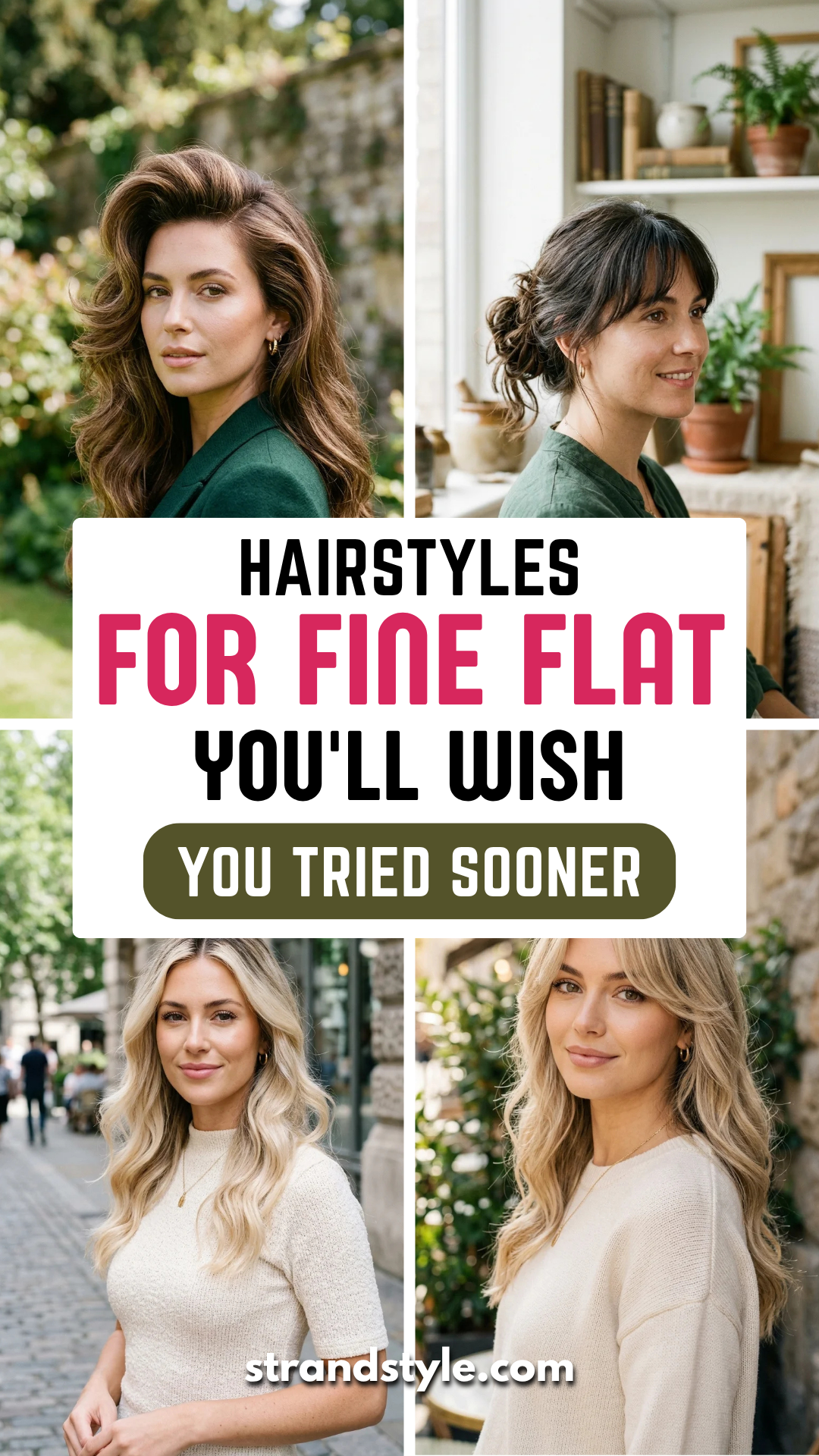
Thinning hair can feel like a blow to your confidence, but it is a common reality for millions. Whether it’s due to genetics, stress, or hormonal changes, the way you cut and style your hair can make a transformative difference. The secret doesn’t always lie in expensive extensions or miracle serums; often, it’s all about the optical illusion of weight and density.
By choosing styles that create movement, utilize strategic layers, or shift the focal point, you can effectively mask sparse areas and give your mane a much-needed lift. Here are 14 expertly curated hairstyles designed to hide thinning hair and provide instant volume.
1. Blunt Bob
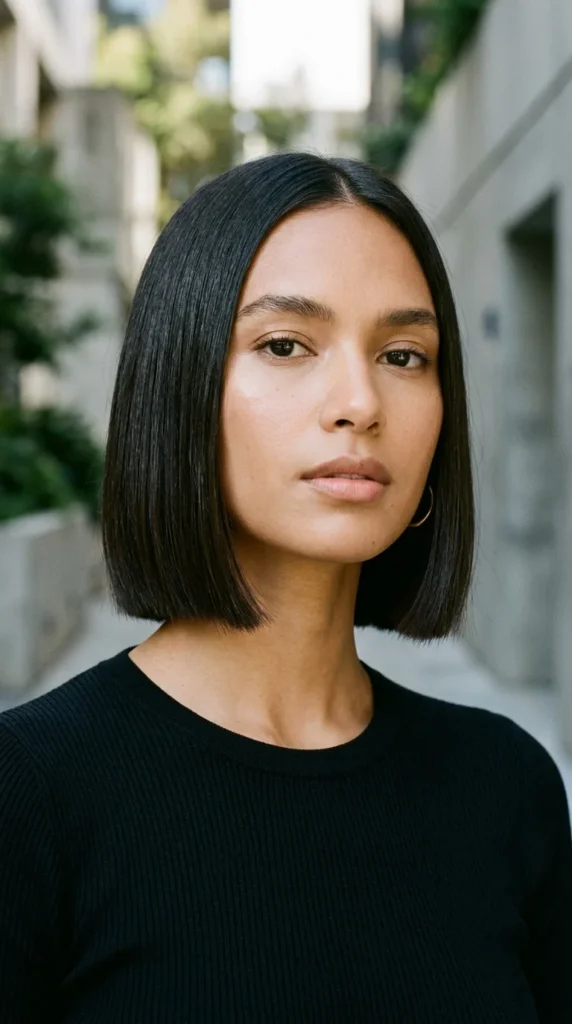
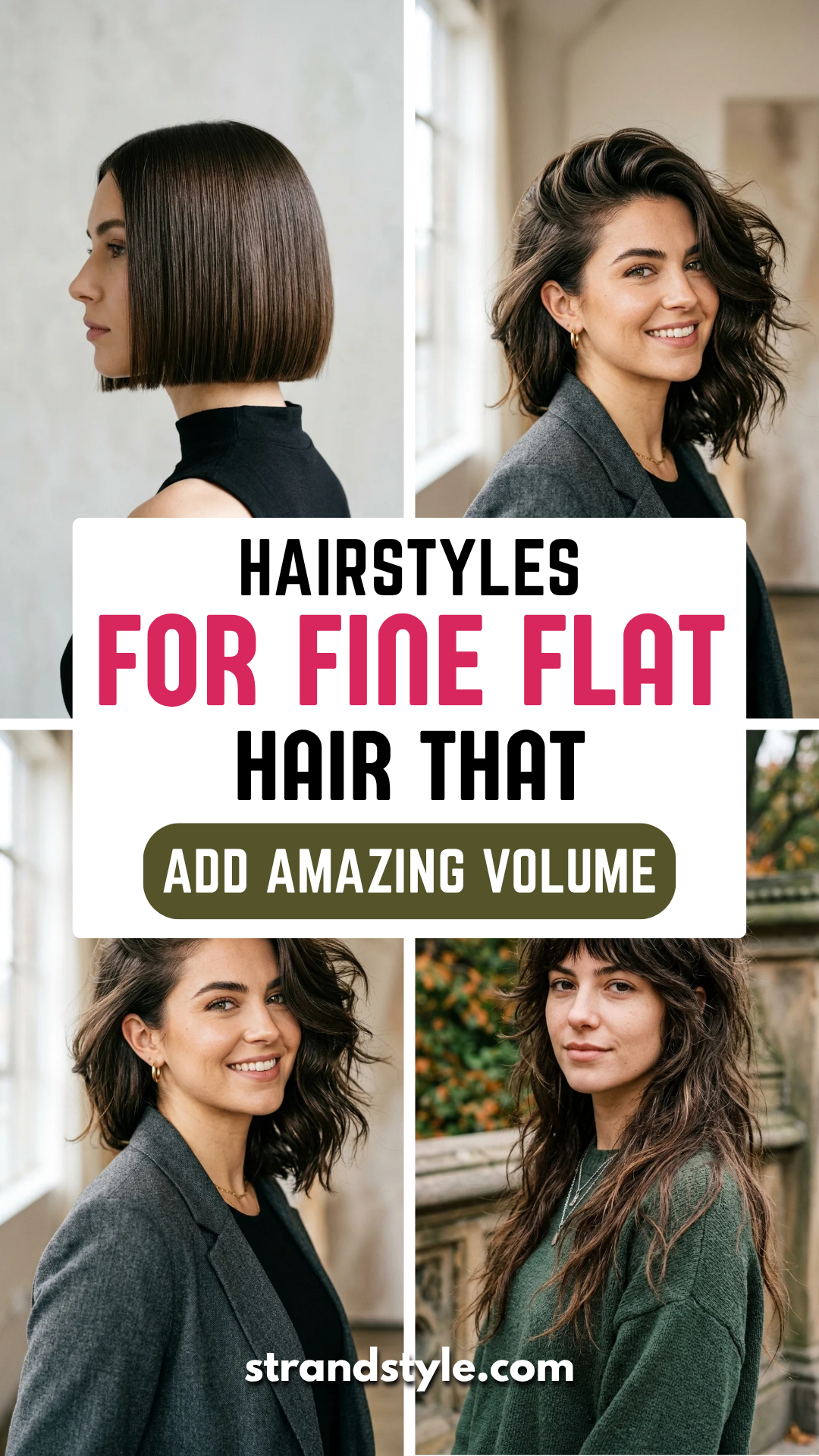
The blunt bob is the gold standard for thin hair. Unlike layered cuts that can make the ends look “stringy,” a blunt cut creates a solid horizontal line. This gives the appearance of thicker, denser hair because all the weight is concentrated at the bottom. By keeping the length around the chin or collarbone, you prevent the hair from being weighed down, allowing for a natural bounce.
- Why it works: It creates a visual “weight” at the perimeter.
- Styling Tip: Use a round brush while blow-drying to flip the ends slightly inward for extra body.
2. Textured Pixie
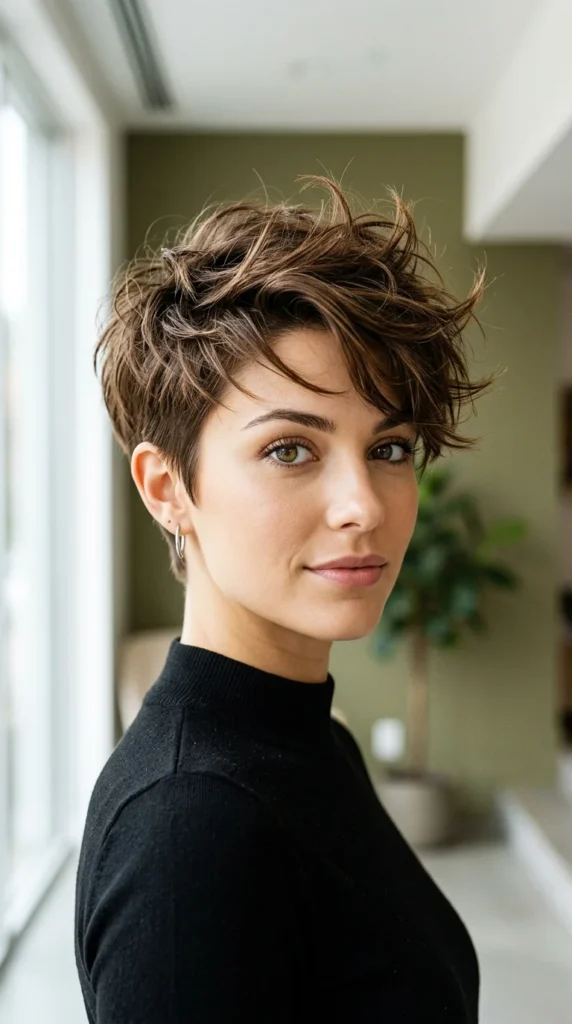
Short hair is often the best solution for thinning strands. A textured pixie cut removes the weight that drags hair down, making it easier to achieve vertical lift. By adding choppy layers and using a bit of pomade, you can “disguise” the scalp and create a ruffled, full-bodied look that appears much thicker than it actually is.
- Why it works: It draws the eye upward and creates “spikes” of volume.
- Styling Tip: Apply a lightweight texturizing paste to the roots to keep the lift all day.
3. Deep Side Part
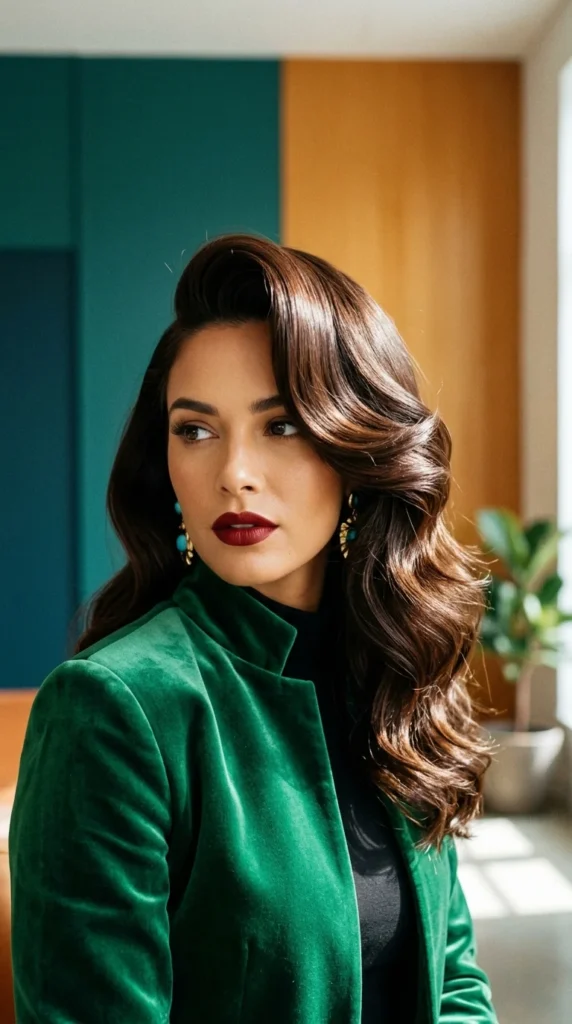
If you’re noticing thinning along your natural part or at the crown, a deep side part is a quick fix. By shifting the hair from one side to the other, you are literally stacking more hair on top of itself. This creates an immediate “hump” of volume near the front of the face, hiding the scalp and adding a touch of glamour.
- Why it works: It redistributes hair density to cover sparse spots.
- Styling Tip: Blow-dry your hair in the opposite direction of the part first, then flip it over for maximum root lift.
4. Curtain Bangs
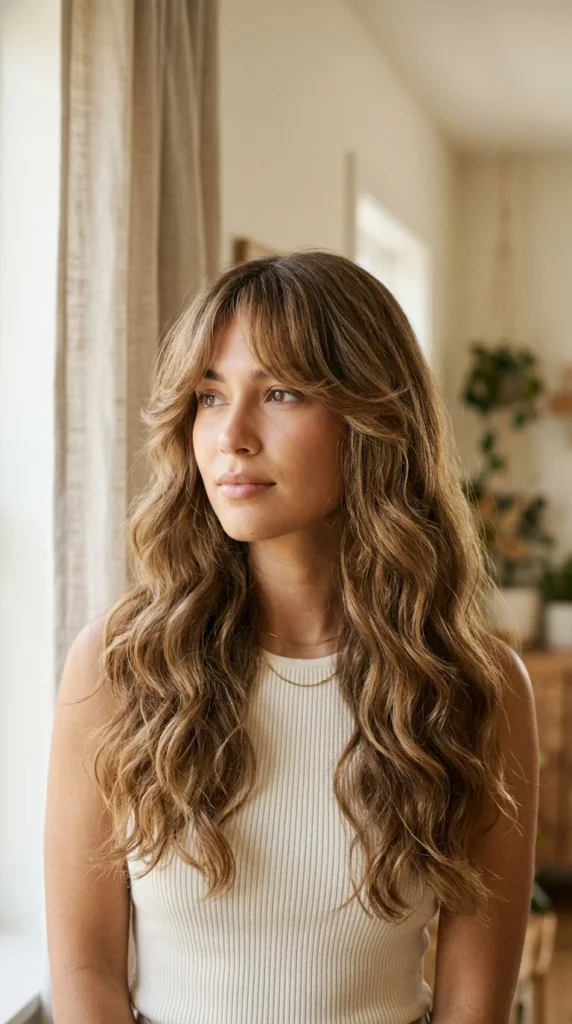
Curtain bangs are a miracle for thinning near the hairline and temples. These soft, face-framing layers draw attention to your eyes and cheekbones rather than your part. They add a layer of “filler” hair around the face, making the overall silhouette look more substantial.
- Why it works: It camouflages a receding hairline or thinning temples.
- Styling Tip: Use a large Velcro roller on the bangs for five minutes to get that perfect “swoop.”
5. Shaggy Layers
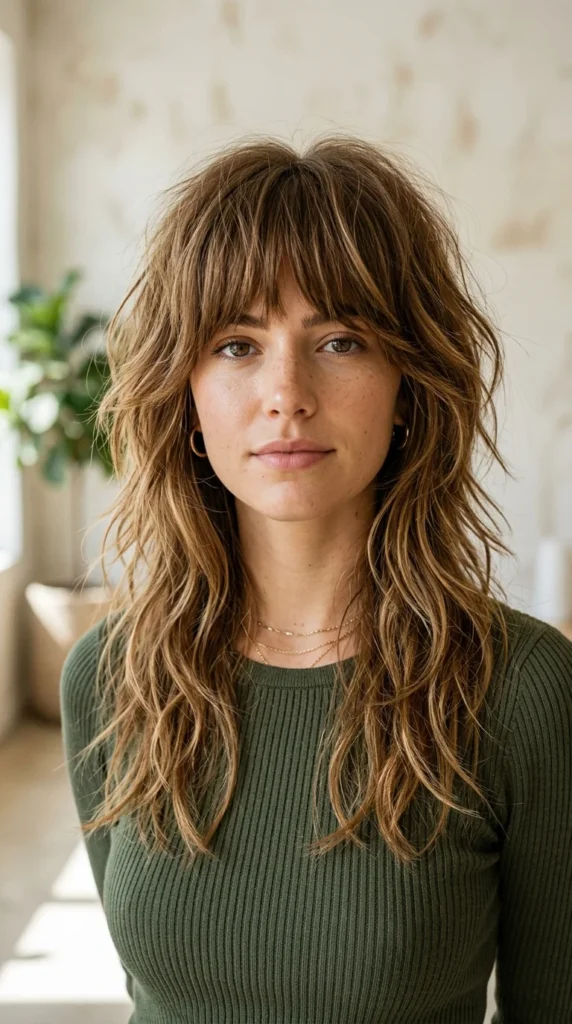
The modern shag is all about texture and movement. By incorporating numerous short layers throughout the crown and mid-lengths, you create a “messy” aesthetic where gaps in the hair are hidden by the overlapping layers. This style is particularly effective for those with wavy or curly hair.
- Why it works: The “organized chaos” of the layers masks the thinness.
- Styling Tip: Use a salt spray or dry shampoo to enhance the “gritty” texture that holds volume.
6. Shoulder-Length Lob
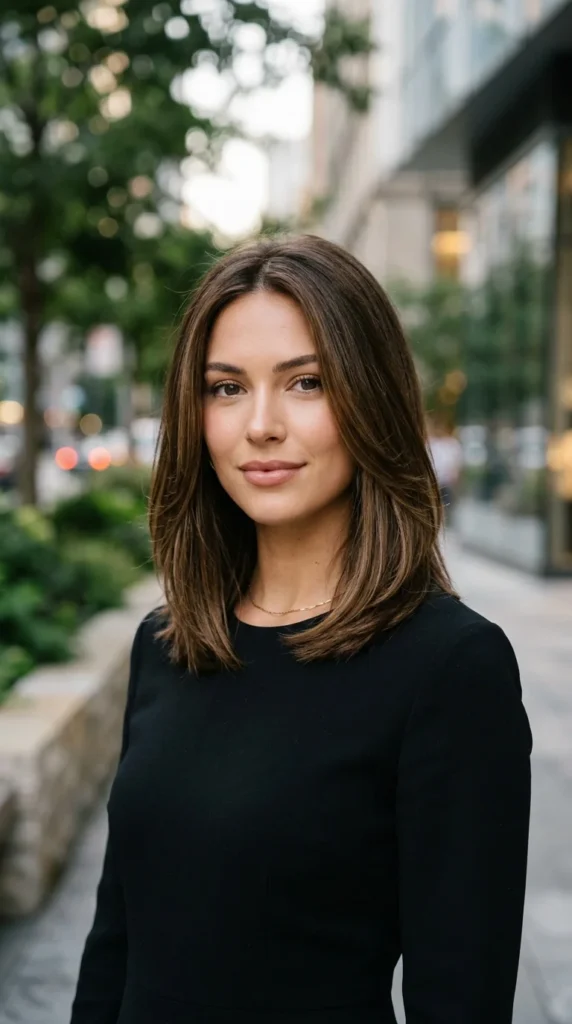
The “Lob” is the perfect middle ground for those who don’t want to go too short. By keeping the length at the shoulders, the hair doesn’t get heavy enough to look flat. Asking for “internal layers” or “invisible layers” provides lift from within without making the ends look thin.
- Why it works: It offers the versatility of long hair with the volume benefits of a bob.
- Styling Tip: A center part with slight waves can widen the appearance of the face and hair.
7. Voluminous Ponytail
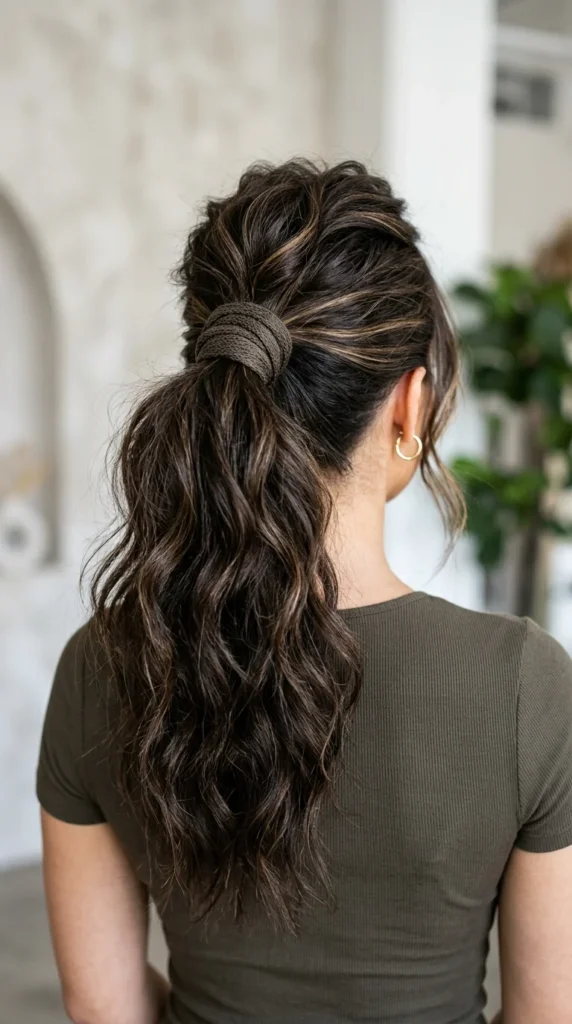
A flat ponytail can emphasize thinning, but a voluminous one does the opposite. By teasing the hair at the crown before pulling it back, you create a “pouf” that mimics density. You can also use two hair ties—one on top of the other—to make the ponytail stand out further from the head, giving it a thicker appearance.
- Why it works: It concentrates all your hair into one dense-looking mass.
- Styling Tip: Gently tug at the hair around the crown to “loosen” it after tying the ponytail for a fuller look.
8. Messy Top Knot
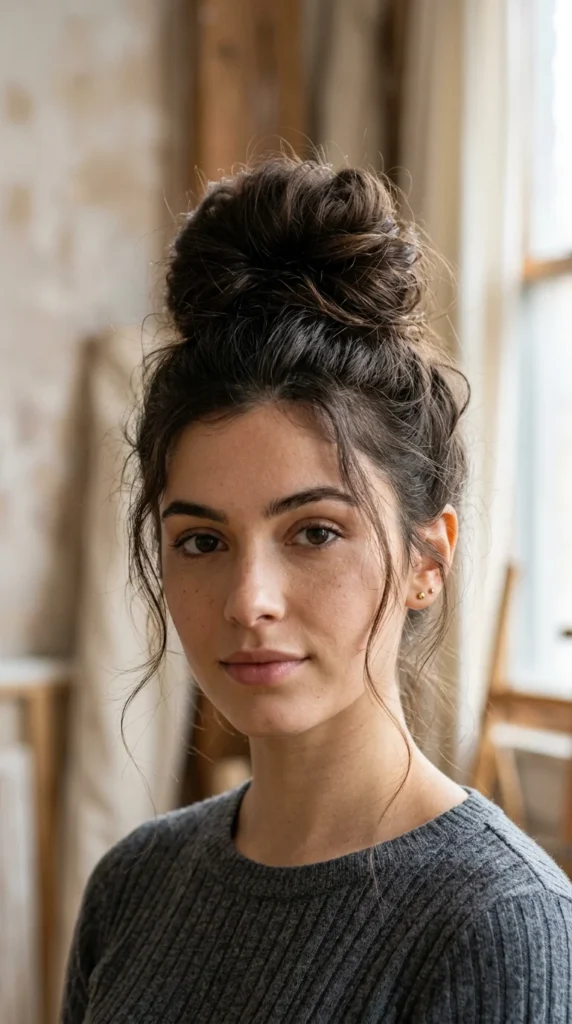
The top knot is a classic for a reason. By gathering the hair at the highest point of the head, you can create a “halo” effect. The trick for thin hair is to keep the bun loose and “messy.” Using a “donut” filler or simply “pancaking” (pulling apart) the bun can make it look twice as large.
- Why it works: It covers the crown and creates a tall, volumized profile.
- Styling Tip: Backcomb the hair before twisting it into the bun to maximize the size.
9. Face-Framing Layers
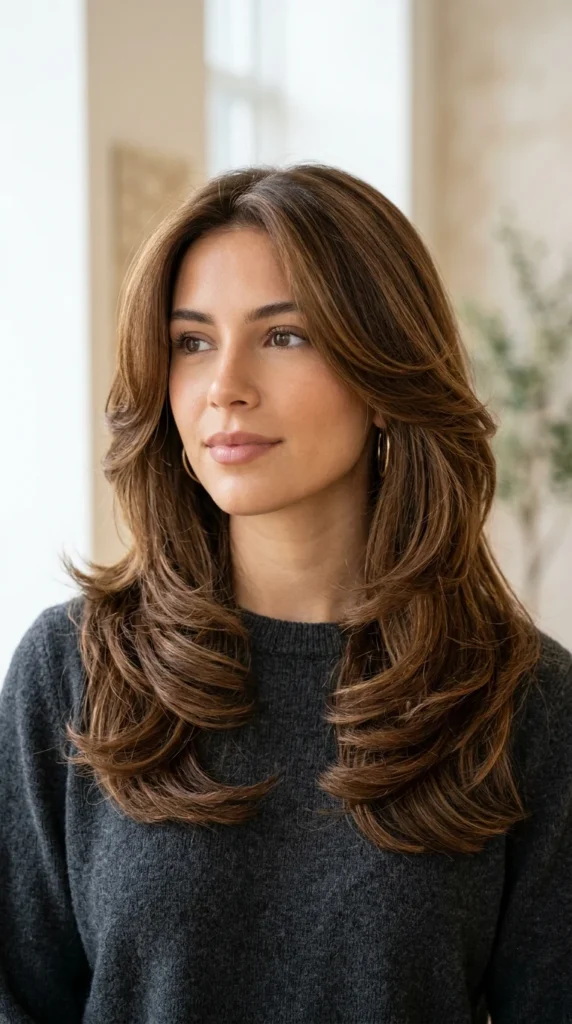
Long, one-length hair often pulls the roots flat due to gravity. By adding layers that start at the chin and graduate downward, you remove some of that weight. These layers also create a “stacking” effect that makes the hair look like it has more body as it moves.
- Why it works: It breaks up the “flat” look and adds bounce near the face.
- Styling Tip: Use a round brush to blow-dry these layers toward the face for a “fringe” effect.
10. Slicked-Back Style
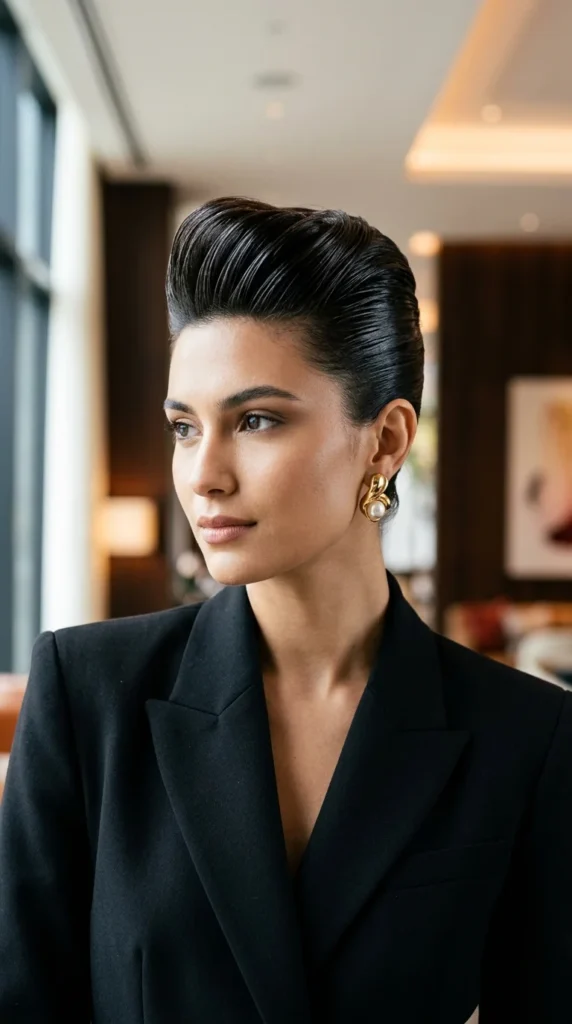
While it might sound counterintuitive, a slicked-back look with a “pompadour” twist can be very effective. By using volume-boosting mousse at the roots and combing the hair straight back and up, you create a solid wall of hair that covers any thinning at the crown or part.
- Why it works: It uses height to create the illusion of abundance.
- Styling Tip: Use a volumizing foam on damp hair and blow-dry upward with a vent brush.
11. Asymmetrical Cut
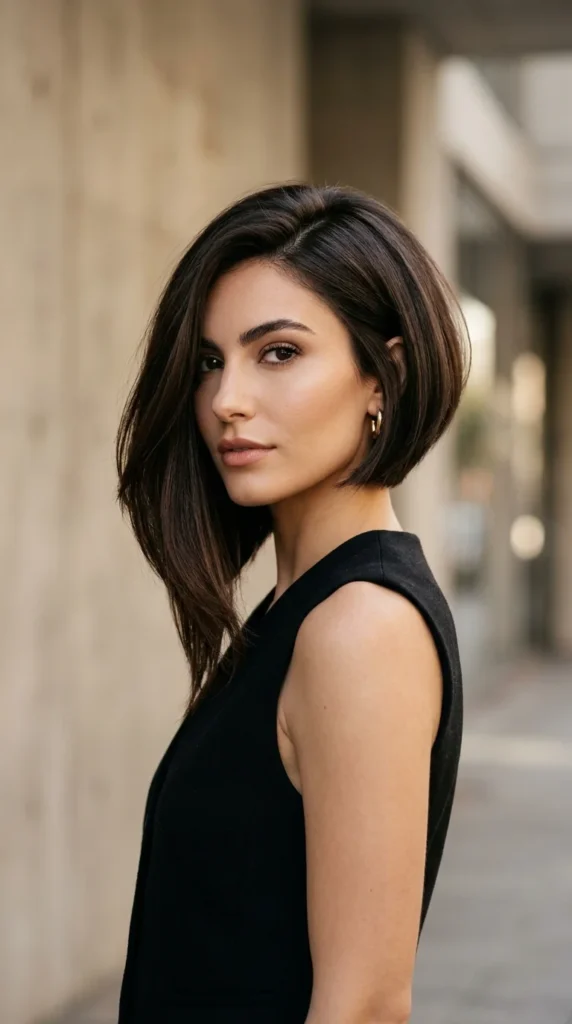
Asymmetry is a fantastic distraction. By having one side longer than the other, you break the eye’s expectation of symmetry, which often highlights thinning areas. The uneven weight distribution naturally creates more volume on the longer side, giving the hair a “fuller” feel.
- Why it works: It shifts the focal point and adds a modern, edgy volume.
- Styling Tip: Keep the shorter side tucked behind the ear to emphasize the volume of the longer side.
12. Braided Headband
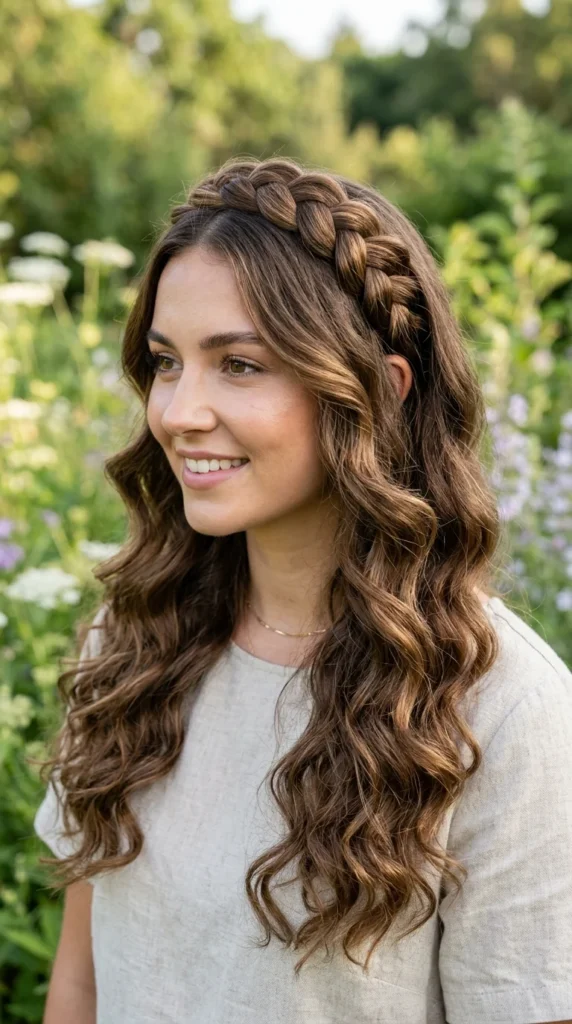
Braids are excellent for adding physical texture to the hair. A “headband” braid—where you braid a section of hair from one ear to the other—acts as a natural camouflage for a thinning hairline. It also “lifts” the hair behind it, making the back of the head look more voluminous.
- Why it works: It creates a textured “barrier” that hides the scalp.
- Styling Tip: Pull at the loops of the braid (pancaking) to make it look thicker and more substantial.
13. Choppy Crop

Similar to the pixie, the choppy crop uses uneven lengths to create “air” between the strands. This airiness translates to volume. This style is perfect for those who want a low-maintenance look that naturally disguises any sparse patches through varied lengths and directions.
- Why it works: The jagged ends prevent the hair from lying flat.
- Styling Tip: Use a dry texture spray to “fluff” the hair in different directions.
14. Wavy Bob (Wob)
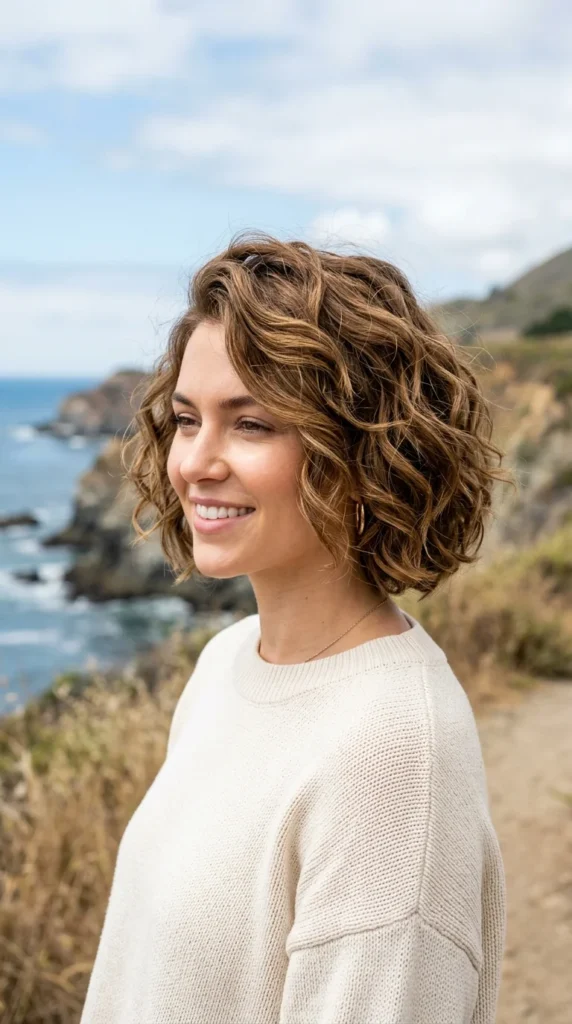
Waves and curls are the ultimate volume-boosters. A “Wob” (wavy bob) adds width to the sides of your head, which balances out thinning on top. The curves of the waves overlap each other, filling in gaps and creating a visual depth that straight hair simply cannot provide.
- Why it works: The horizontal expansion of waves makes the hair look twice as thick.
- Styling Tip: Use a 1-inch curling iron and leave the ends straight for a modern, volumized look.
Tips for Maintaining Volume
Beyond the cut, how you care for your hair determines how well these styles perform:
- Avoid Heavy Oils: Thin hair is easily weighed down by heavy silicones and oils. Opt for lightweight, “volumizing” formulas.
- Dry Shampoo is Your Best Friend: Use it on clean hair to prevent oils from flattening your roots and to add instant “grip.”
- Scalp Care: A healthy scalp promotes better growth. Consider scalp massages to increase blood flow.
- The Power of Color: Highlights and lowlights create “dimension.” Shadows and highlights make the hair look deeper and thicker than a solid, flat color.