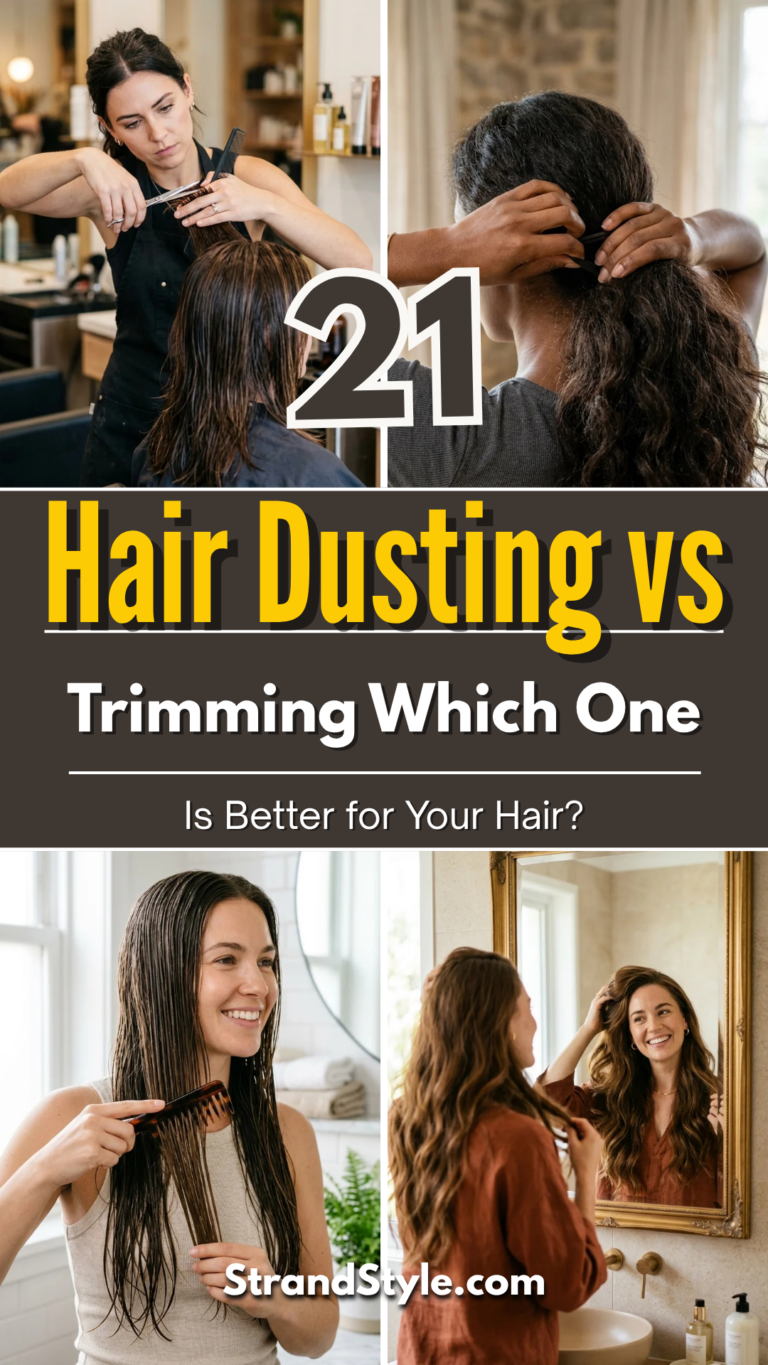
For anyone chasing the dream of “Rapunzel” length, the sound of salon shears can be terrifying. We’ve all been there: you ask for a “tiny trim,” and you walk out three inches shorter. But what if there was a way to keep your length while still banishing those pesky split ends? Enter the world of hair dusting—a technique often whispered about in beauty circles but rarely understood. In the showdown of Hair Dusting vs. Trimming, which method actually reigns supreme for your specific hair goals? Let’s dive into the 21 key differences, benefits, and secrets to help you decide.
1. The Technique
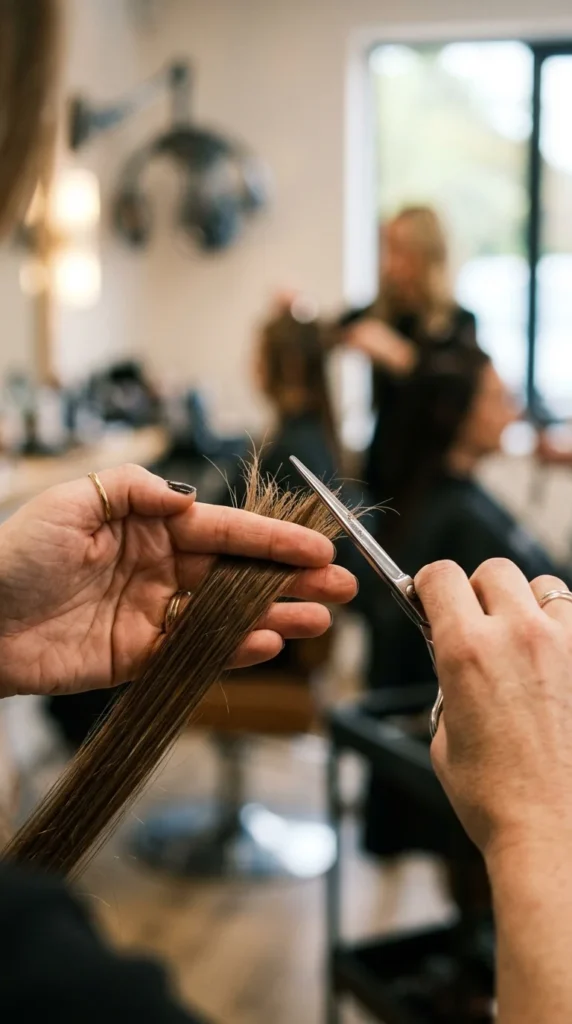
Hair dusting is often called the “search and destroy” method. Instead of cutting across the bottom of the hair to remove length, the stylist works with thin sections, sliding their fingers down the hair shaft to make split ends pop up. They then “dust” off only those tiny, frayed tips that stick out. A traditional trim, conversely, involves cutting a straight or curved line across the ends of the hair, usually removing at least half an inch to an inch of growth.
2. Length Retention

If your primary goal is length, dusting is your best friend. Because dusting only targets the damaged tips along the surface of the hair, you lose zero visible length from the bottom. It allows you to retain every millimeter of growth while removing the damage that could cause the hair to snap later. Trimming is essential for maintaining a specific style or shape, but it inherently reduces the total length of your hair every time it’s performed.
3. Split Ends
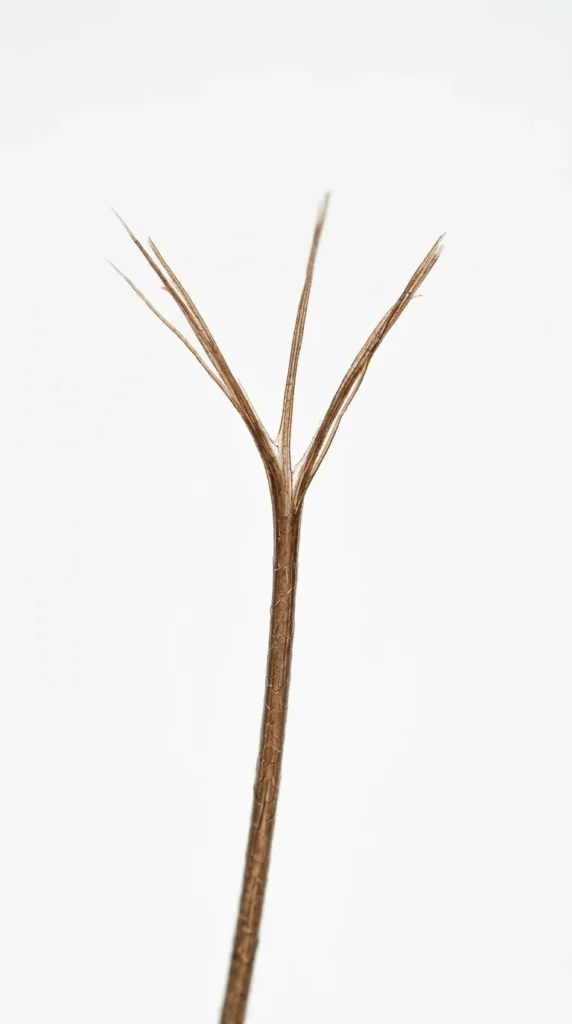
Both methods tackle split ends, but they do so differently. A trim removes split ends that occur at the very bottom of your hair. However, hair doesn’t always split at the bottom; damage can occur mid-shaft due to friction or heat. Dusting is the only way to catch those mid-shaft split ends without compromising the overall length of the haircut. It prevents the split from traveling up the hair shaft, which would eventually lead to breakage.
4. Hair Health

In the long run, both techniques contribute to hair health, but dusting is more of a “preventative maintenance” step. By removing the tiny frayed ends before they become full-blown splits, you maintain the structural integrity of the hair strand. Trimming is more about “restorative maintenance,” cutting away the ends that have already become thin, dry, or weathered by the elements and styling.
5. Frequency

How often you should visit the salon depends on your chosen method. Dusting can be done more frequently—every 6 to 8 weeks—because you aren’t losing length. It keeps the hair looking polished constantly. A traditional trim is usually recommended every 12 weeks for those growing their hair out, or every 6 weeks for those trying to maintain a specific short style like a bob or a pixie cut.
6. Visual Results
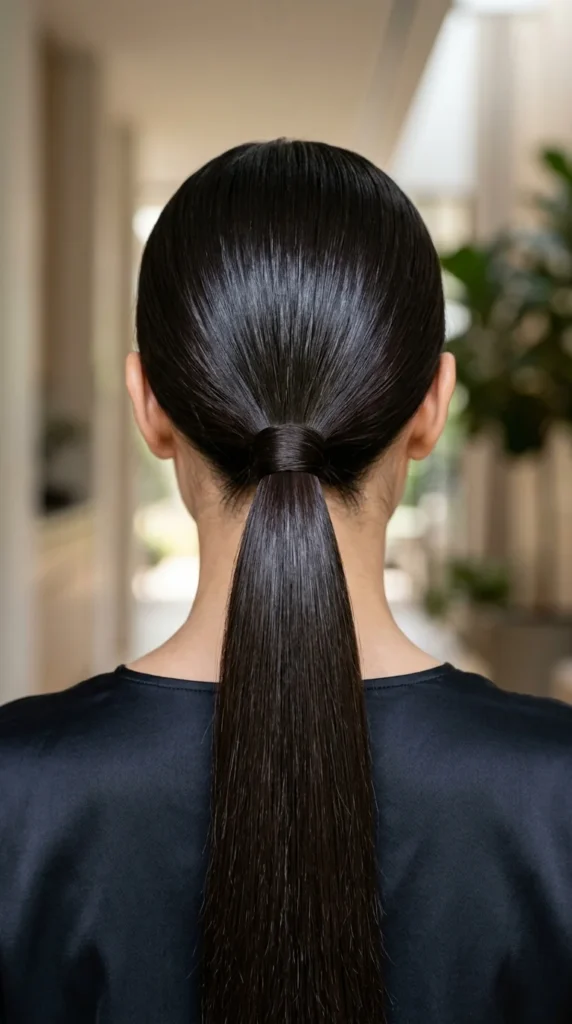
The visual result of a trim is a crisp, clean edge. It makes the hair look thicker at the bottom and more uniform. The visual result of dusting is a reduction in “frizz” and “fuzziness.” Many people mistake mid-shaft split ends for frizz; dusting removes that texture, making the hair look sleeker and more reflective without changing the shape of the haircut.
7. Professionalism

While you can technically try to “dust” your own hair at home, it is a tedious and precise process that is best left to professionals. A stylist knows how to distinguish between a split end and a new growth hair (baby hair). Cutting a new growth hair by mistake can lead to more frizz. Trimming, especially a blunt cut, is also difficult to do at home without ending up with uneven layers or “shelf-like” edges.
8. Tools
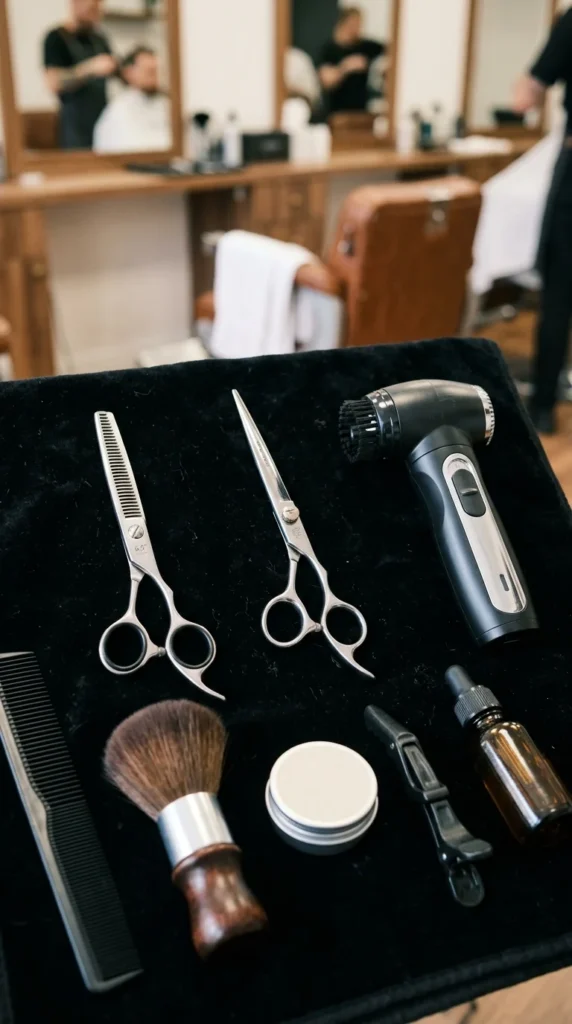
Dusting requires incredibly sharp, high-quality shears. If the scissors are dull, they will crush the hair follicle instead of cutting it, leading to more split ends. Some stylists use a specific tool called a “hair duster” or “split-end trimmer” (a motorized device), but most experts prefer the precision of manual shears. Trimming utilizes standard shears, razors, or clippers depending on the desired texture of the ends.
9. Texture
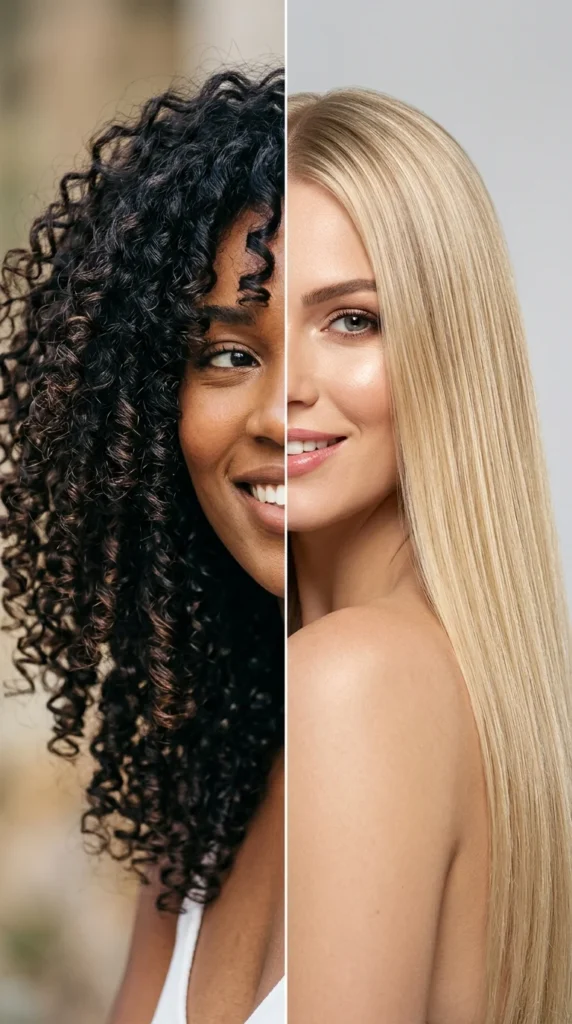
Texture plays a huge role in choosing between the two. Dusting is a godsend for curly and coily hair, which is prone to “single-strand knots” (fairy knots). Dusting allows a stylist to remove those knots without ruining the curl pattern or losing length. Straight hair benefits from dusting to remove the “velcro” feel that happens when split ends catch on each other. However, straight hair often needs a trim more frequently to keep the bottom edge looking neat.
10. Growth Goals

If you are trying to reach “mermaid length,” dusting is the clear winner. By only removing the deadest 1/16th of an inch, you allow your monthly growth (typically half an inch) to actually accumulate. If you trim half an inch every time you grow half an inch, you will stay at the same length forever. Dusting breaks the cycle of “growing it out just to cut it off.”
11. Damage Prevention
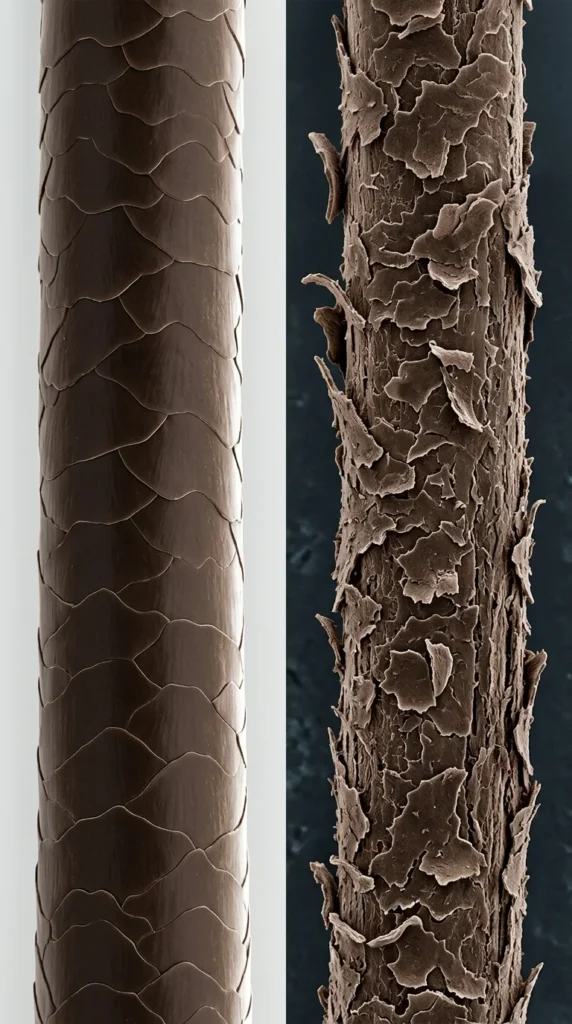
Think of hair dusting like weeding a garden. You are removing the “weeds” (split ends) before they can choke out the healthy plants (the rest of the hair strand). If a split end is left alone, it will continue to split all the way up the shaft toward the scalp. Once it reaches the mid-shaft, the hair will break. Dusting stops this process in its tracks, preserving the strength of the hair.
12. Salon Cost

Surprisingly, hair dusting can sometimes cost as much as or more than a full haircut. This is because it is incredibly time-consuming. A stylist has to go through your hair section by section, carefully examining the strands. A trim is much faster and is often included in the price of a standard wash-and-blowout. When booking, ask your stylist if they offer dusting as a “micro-trim” or an add-on service.
13. Time Commitment

A quick trim can take 15 to 20 minutes. A thorough hair dusting session can take anywhere from 45 minutes to over an hour, depending on the density and length of your hair. It is a meticulous “slow beauty” ritual. If you’re in a rush, a trim is the way to go. If you have a free afternoon and want to save every inch of your hair, book a dusting.
14. Hair Density

People with very thick hair often find dusting more beneficial because they have more surface area for split ends to hide. When thick hair gets split ends, it can look bulky and unmanageable. Dusting removes that “bulk” of damage without thinning out the hair with thinning shears. For those with thin hair, a regular trim is often better because it creates the illusion of thickness by making the ends look dense and straight.
15. Styling Ease

Have you ever tried to run a comb through your hair and it gets stuck at the bottom? That’s usually the work of split ends. Both dusting and trimming will make your hair easier to style and brush. However, dusting is particularly effective at stopping the “tangle-fest” that happens in the middle of the hair length, while a trim stops the tangling at the very tips.
16. Heat Damage

If you use heat tools (flat irons, blow dryers) daily, you likely have damage scattered throughout your hair, not just at the ends. Heat damage often manifests as “white dots” along the hair shaft—these are areas where the hair is about to break. Dusting is the best way to remove these damaged points before they snap, whereas a trim might miss them if they are located higher up the hair.
17. Color-Treated Hair

Chemical processing like bleaching or coloring can make the hair cuticle more porous and prone to splitting. Color-treated hair requires more frequent maintenance. Dusting is excellent for color-treated hair because it removes the chemical damage without sacrificing the length that you likely spent a lot of money to style and color.
18. Tangle Reduction
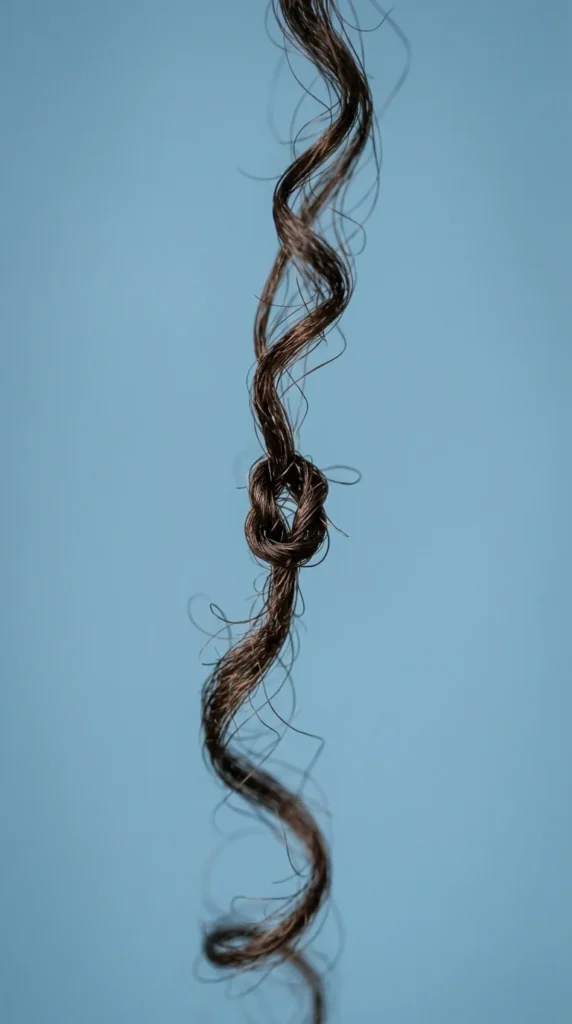
Fairy knots are the bane of long-haired individuals. These tiny knots happen when a single hair strand loops around itself. You can’t “brush out” a fairy knot; you have to cut it. Dusting is the primary method used to hunt down and remove these knots. If you find your hair is constantly knotting despite using conditioner, you likely need a dusting session rather than a full trim.
19. Seasonal Care

In the winter, sweaters and scarves cause friction against the back of the hair, leading to “nape knots” and split ends. In the summer, the sun and chlorine dry out the ends. Dusting is a great way to “clean up” the seasonal damage after winter or summer without losing the length you’ve grown during those months.
20. Confidence Boost

There is a psychological component to the “dusting vs. trimming” debate. Many people feel a loss of identity when they lose significant length. Dusting provides the “fresh haircut” feeling—the smoothness, the shine, and the bounce—without the “haircut regret.” It’s the perfect solution for those who are emotionally attached to their long locks.
21. Final Verdict
Which one is better? It depends on your goal.
- Choose Hair Dusting if: You are growing your hair out, you have mid-shaft damage, you have curly hair prone to knots, or you want to remove frizz without losing length.
- Choose a Trim if: You want to maintain a specific shape, your ends are very thin and “see-through,” you want your hair to look thicker, or you haven’t had a cut in over six months.
Most experts suggest a hybrid approach: Dust every 8 weeks and do a proper trim once or twice a year. This ensures that your style stays fresh while your length continues to hit new milestones. Happy growing!