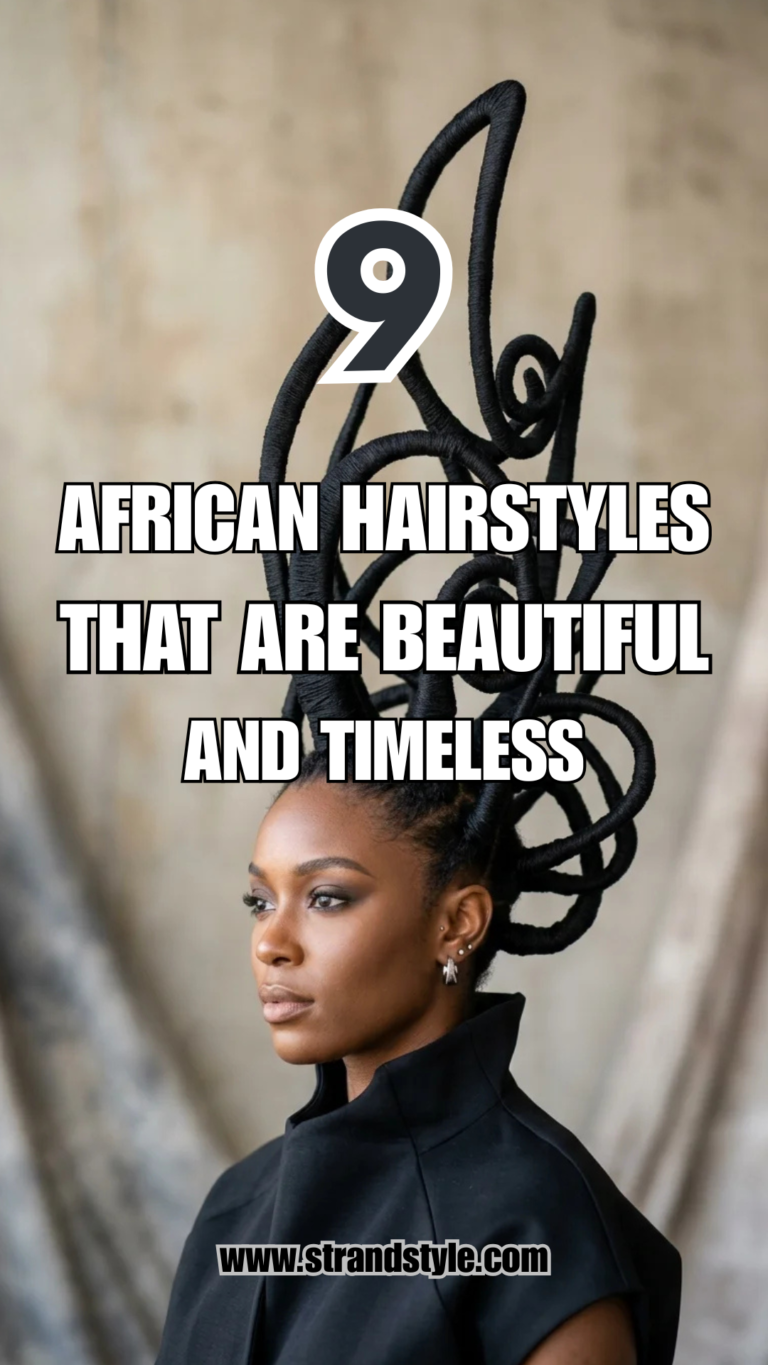
For centuries, African hairstyles have been far more than just a fashion statement. They are a profound form of communication, a symbol of status, a reflection of tribal identity, and a celebration of the unique texture of Afro-textured hair. From the intricate patterns of the Nile Valley to the bold silhouettes of the West African coast, these styles have traveled across oceans and through generations, remaining as relevant today as they were thousands of years ago.
The artistry involved in these styles is staggering. It requires patience, precision, and a deep understanding of hair health. Beyond the aesthetics, these “protective styles” serve the practical purpose of shielding natural hair from environmental stressors, allowing it to grow and thrive. Whether you are looking for cultural connection or a stunning new look, these nine hairstyles represent the pinnacle of African beauty and heritage.
1. Box Braids
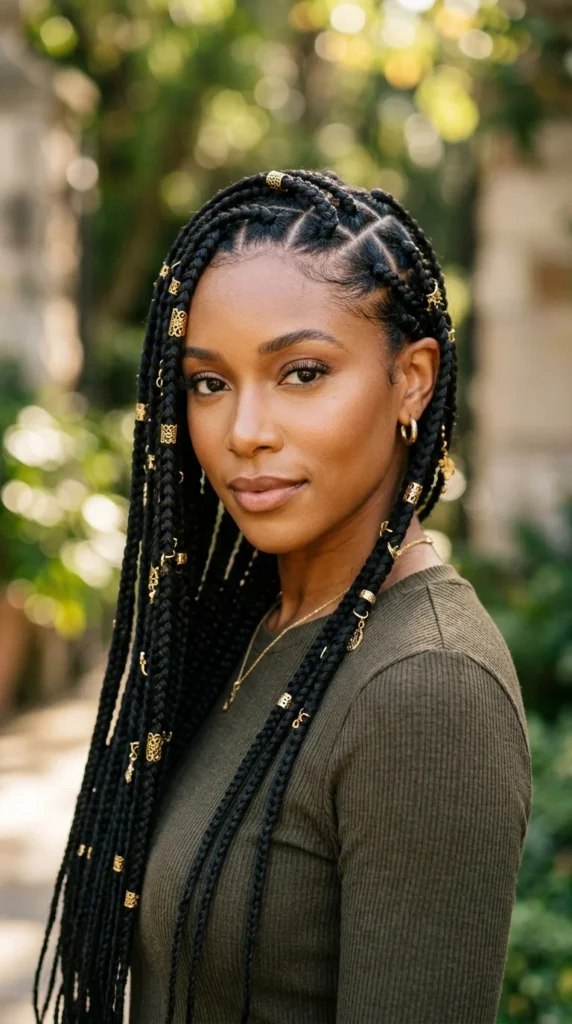
Box braids are perhaps the most iconic and globally recognized African hairstyle. Characterized by “box-shaped” or square hair divisions, these individual braids offer a level of versatility that few other styles can match. While they gained massive mainstream popularity in the 1990s, their roots can be traced back to the Himba people of Namibia and the ancient inhabitants of the Nile Valley.
The beauty of box braids lies in their adaptability. They can be worn long or short, thick (jumbo) or thin (micro), and styled into buns, ponytails, or intricate updos. Because the natural hair is tucked away within the synthetic or natural extensions, it is protected from manipulation, making this a go-to choice for those looking to retain hair length while maintaining a polished, effortless look for weeks at a time.
2. Cornrows
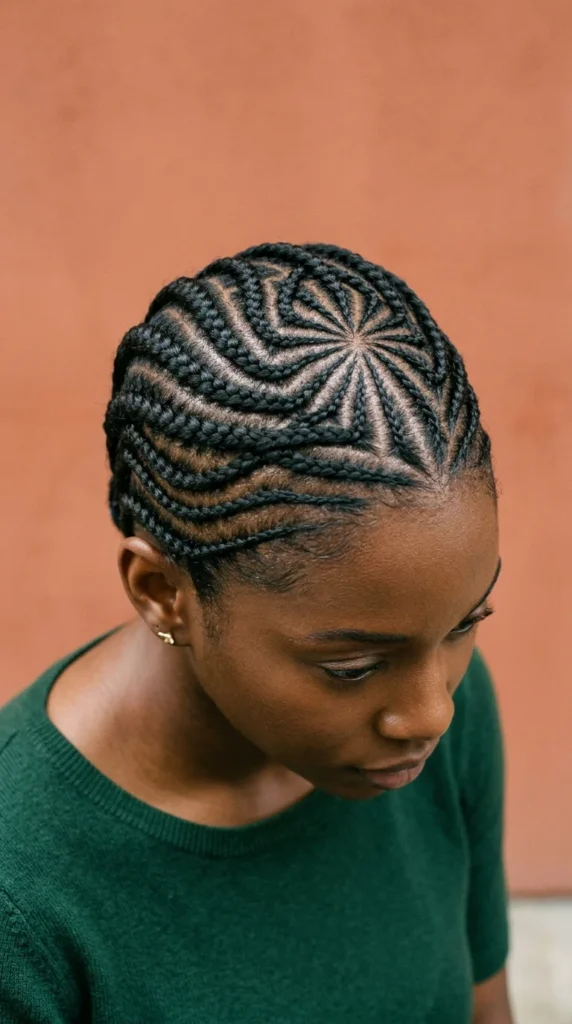
Cornrows are an ancient traditional African style where the hair is braided very close to the scalp using an underhand, upward motion to create a continuous, raised row. Historically, cornrows were used to signify one’s age, religion, wealth, or marital status. In some cultures, they were even used as a clandestine map for enslaved people to communicate escape routes.
Today, cornrows are celebrated for their architectural beauty. They can be simple straight-back rows or complex, curving works of art. As a foundation for other styles like crochet braids or weaves, they are indispensable, but worn on their own, they highlight the facial structure and the artistry of the braider. They remain a timeless symbol of resistance, heritage, and meticulous craftsmanship.
3. Bantu Knots
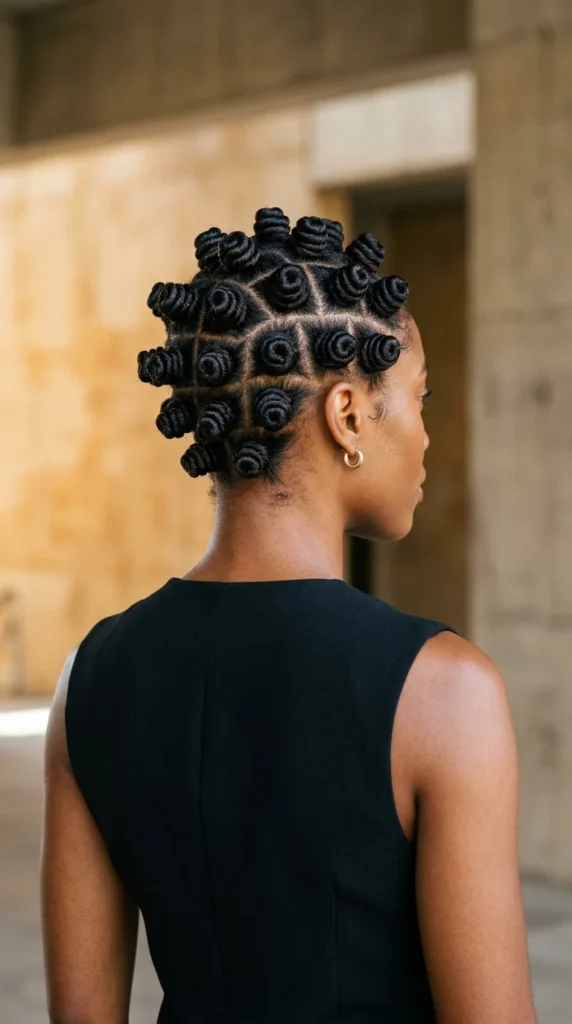
Originating from the Bantu-speaking peoples of southern and central Africa, Bantu knots are a striking combination of braids and buns. The hair is sectioned off, twisted, and then wrapped around itself to create a small, funnel-like knot. This style is not only a visual masterpiece but also serves a dual purpose.
When the knots are “taken down,” they reveal voluminous, bouncy curls known as a “Bantu knot-out.” This heat-free curling method has been used for generations to achieve definition in natural hair. Whether worn as the knots themselves—which provide a bold, regal silhouette—or as the resulting curls, this style is a testament to the ingenuity of African hair care traditions.
4. Fulani Braids
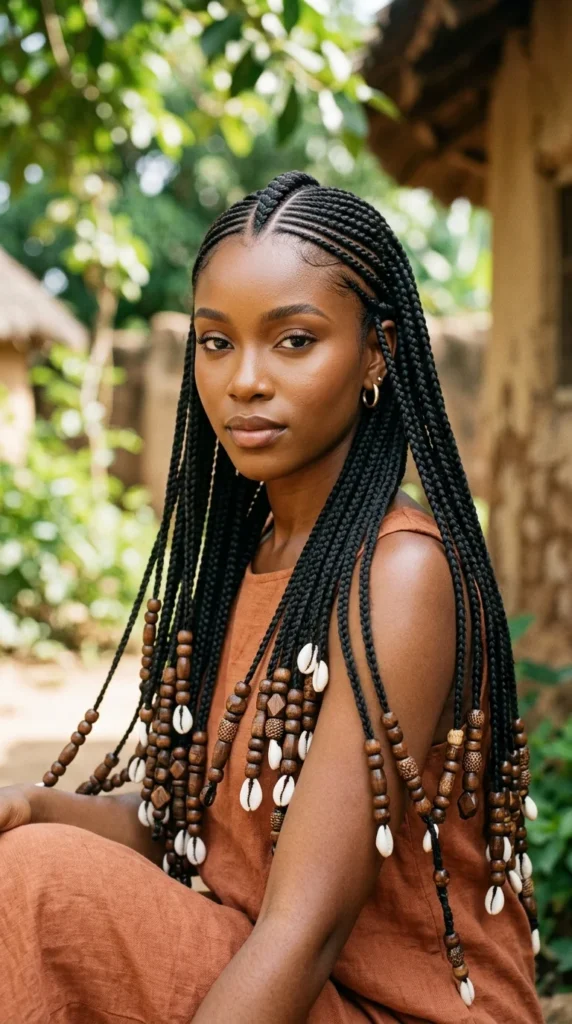
The Fula people (or Fulani) of West Africa are the architects of this breathtakingly decorative style. Fulani braids are easily identified by specific patterns: a central braid down the middle of the head, side braids that hang or loop forward near the ears, and the heavy use of accessories.
Beads, cowrie shells, gold clips, and silver coins are often woven into the ends or along the lengths of the braids. This style is a celebration of femininity and status. In modern fashion, Fulani braids have become a red-carpet favorite, blending ancient nomadic traditions with contemporary glamour. They offer a unique way to frame the face while honoring a rich cultural lineage.
5. Afro
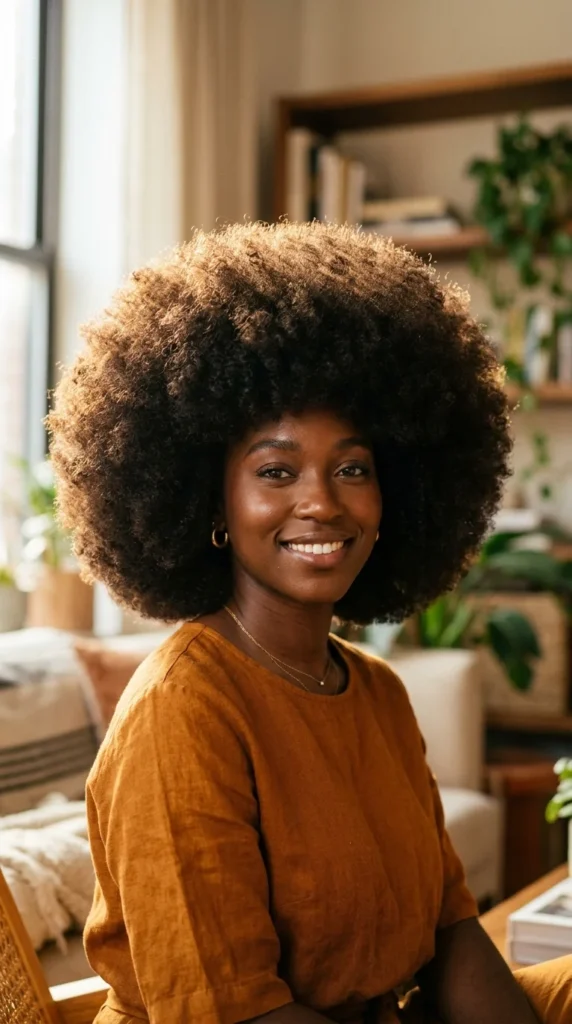
The Afro is more than just a hairstyle; it is a powerful symbol of pride, identity, and the “Black is Beautiful” movement. Unlike braided styles that manipulate the hair’s shape, the Afro celebrates the hair in its most natural, gravity-defying state. It gained worldwide prominence in the 1960s and 70s as a rejection of Eurocentric beauty standards.
Maintaining a healthy Afro requires a deep understanding of moisture and volume. Using tools like the Afro pick, which often features decorative handles or the “black power” fist, the hair is lifted from the roots to create a spherical silhouette. The Afro remains a timeless choice for those who want to showcase the raw power and ethereal beauty of natural textures.
6. Locs
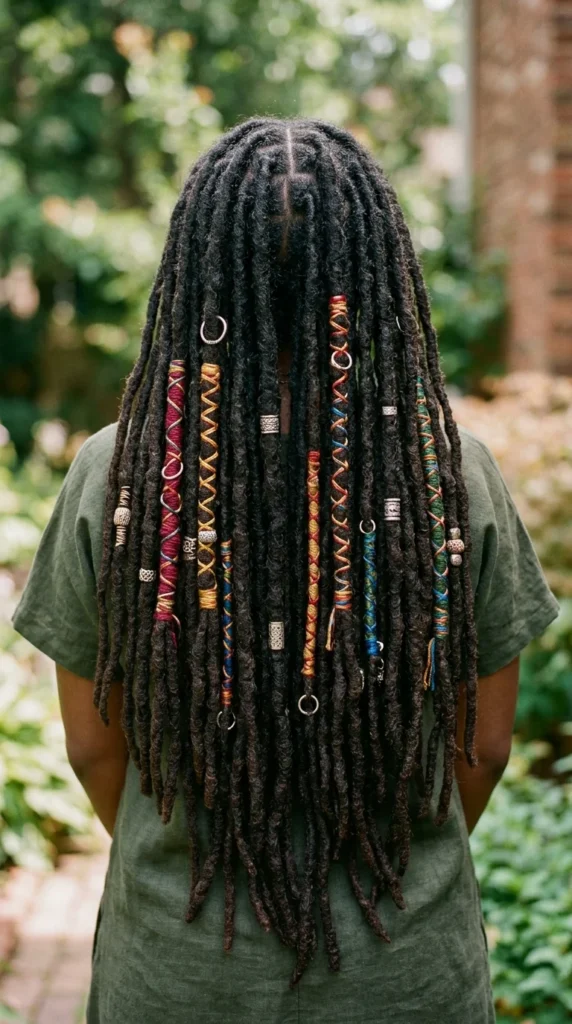
Locs (often referred to as dreadlocks, though many prefer the term “locs” to distance the style from the word “dread”) have a history that spans across the globe, from ancient Egypt to the Rastafari movement in Jamaica. This style involves the natural matting or “locking” of hair over time, creating rope-like strands.
Locs represent a journey. They require time, patience, and a commitment to the process of growth. They can be started via palm rolling, interlocking, or two-strand twists. Once matured, locs can be styled in almost any way loose hair can—braided, curled, or swept into elegant updos. They are often associated with spirituality, strength, and a deep connection to one’s roots.
7. Ghana Braids
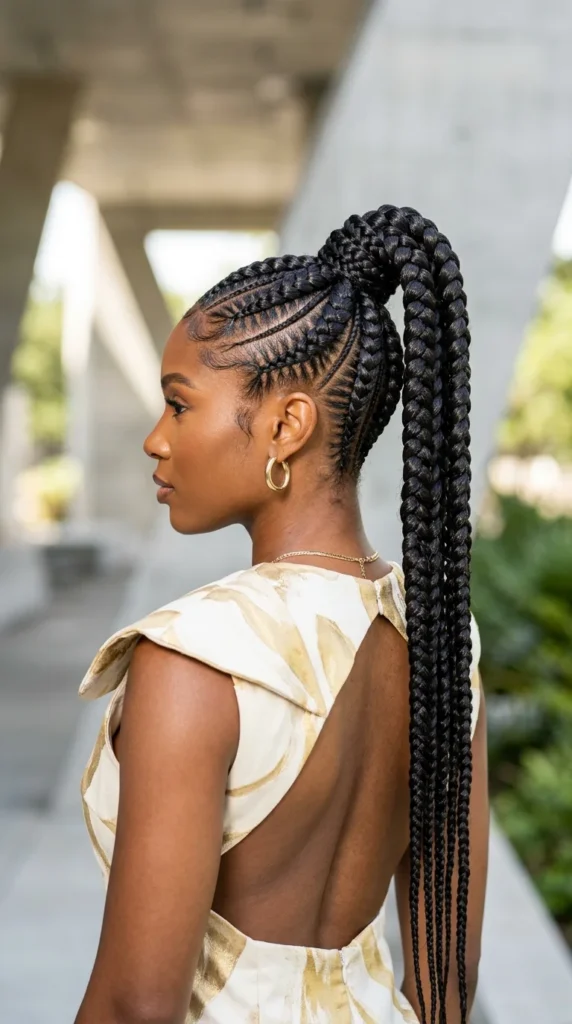
Ghana braids, also known as banana braids or Cherokee braids, are a variation of cornrows that use a “feed-in” technique. This involves gradually adding extensions to the braid to create a tapered look that starts thin at the forehead and becomes thicker toward the back. This technique creates a more natural-looking hairline and puts less tension on the edges.
Historically, these braids were depicted in ancient hieroglyphics and sculptures, proving their ancient origin. They are prized for their longevity and their ability to make a bold statement with fewer braids. The clean, thick lines of Ghana braids provide a sophisticated and regal aesthetic that works for both casual settings and formal events.
8. Senegalese Twists
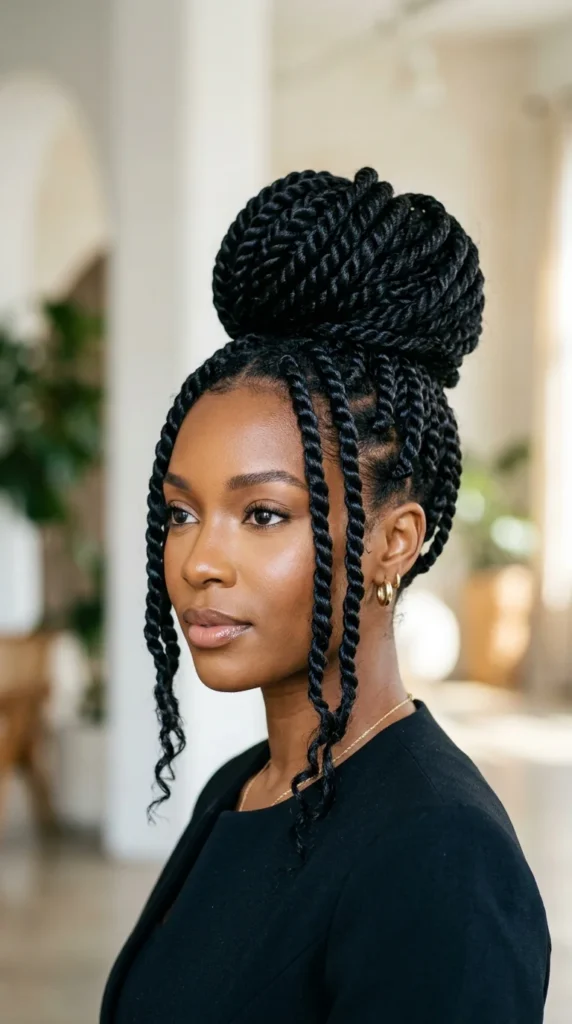
Senegalese twists, often called “rope twists,” are a popular style originating from Senegal in West Africa. Unlike braids which use three strands, twists use two. This results in a smooth, cylindrical, rope-like appearance that is incredibly elegant.
These twists are typically done with Kanekalon or Marley hair, giving them a silky or more natural texture depending on preference. They are lighter on the head than many braided styles and are relatively easy to install and remove. The Senegalese twist is the epitome of grace, offering a neat and professional look that transitions perfectly into a glamorous evening style.
9. African Threading
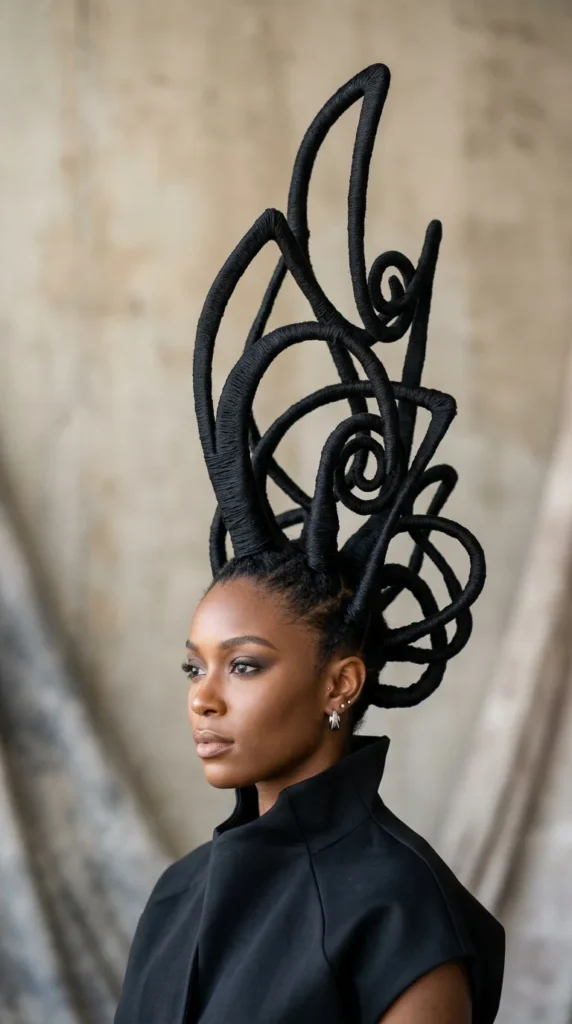
African threading is one of the most traditional and fascinating methods of hair styling and stretching. By wrapping black thread (usually cotton or wool) tightly around sections of hair from root to tip, the hair is protected and elongated without the use of heat.
In many West African cultures, threading is used to create intricate, structural designs that look like modern sculpture. While it has traditionally been used as a way to stretch hair for other styles, it has seen a resurgence as a standalone fashion statement. It is a brilliant example of how traditional African hair care techniques are both practical for hair health and visually stunning in their complexity.