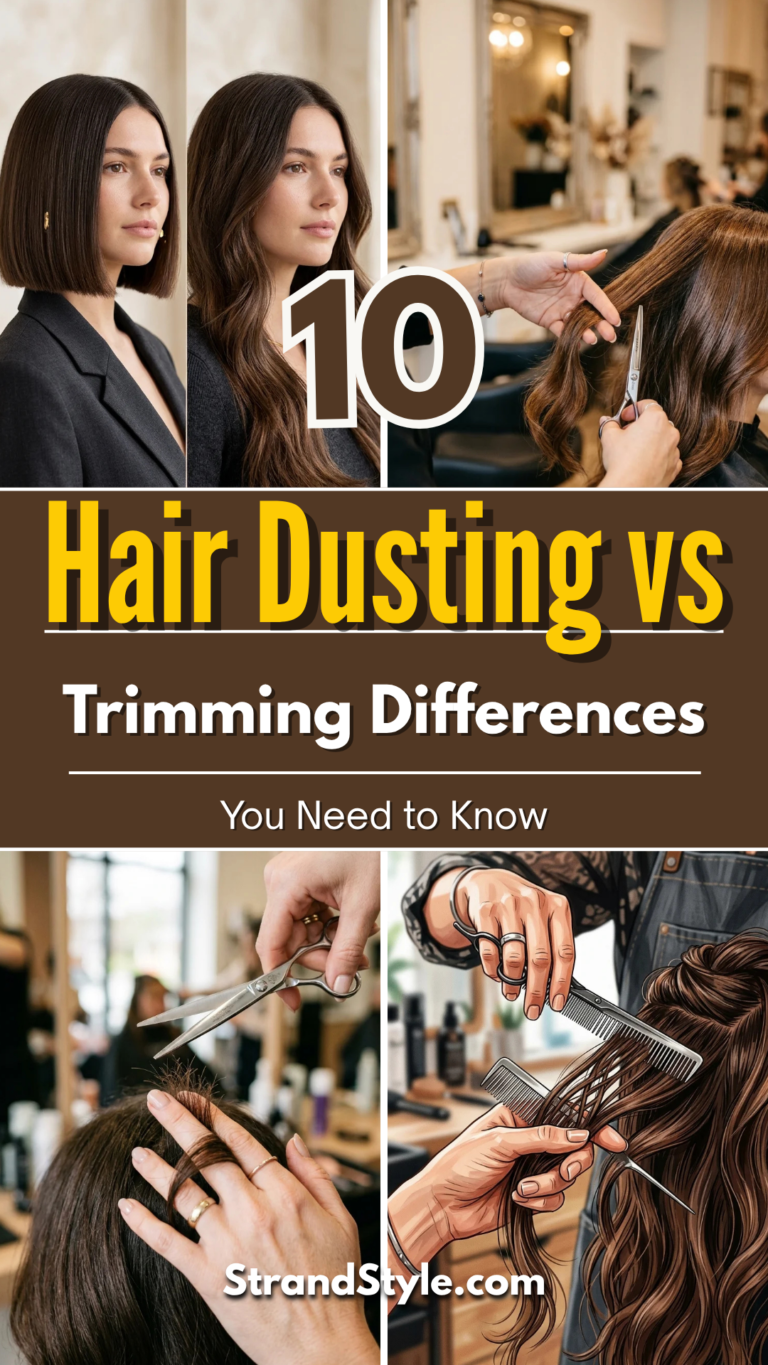
In the quest for Rapunzel-like length and a commercial-worthy shine, the way we maintain our ends is everything. For decades, the “trim” was the undisputed king of hair maintenance. You went to the salon, lost an inch or two, and walked out with healthy, albeit shorter, hair. But a new contender has risen to fame in recent years: hair dusting.
Often referred to as the “miracle technique” for length retention, hair dusting is a surgical approach to split ends that promises to keep your length while deleting the damage. However, these two methods are not interchangeable. Understanding the nuances between a traditional trim and a precision dusting can mean the difference between reaching your hair goals and stuck in a cycle of constant chopping.
1. Purpose
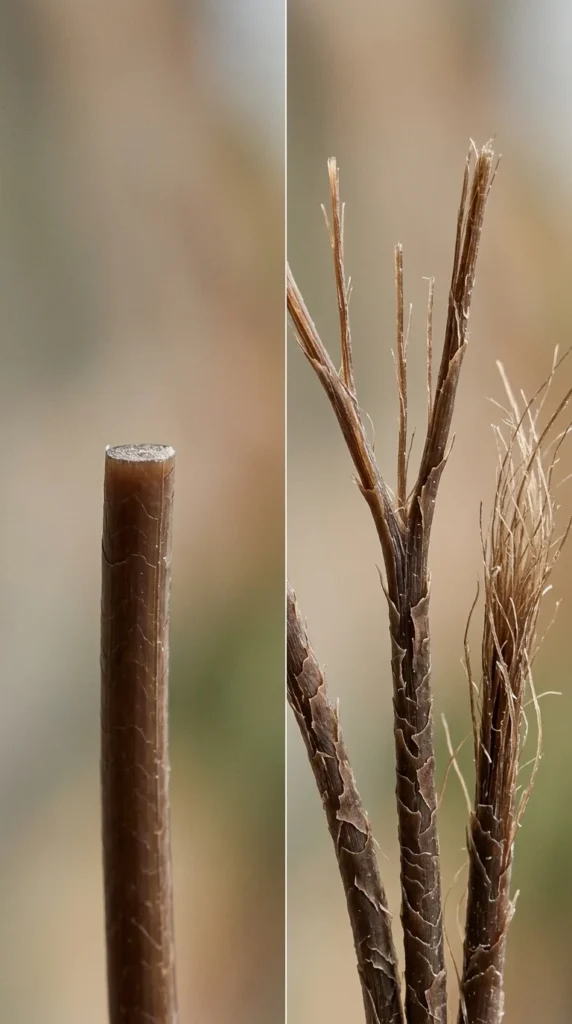
The fundamental goal of each technique is the primary differentiator. A trim is designed to maintain the shape, style, and overall health of the hair by removing the oldest part of the hair—the very bottom. It’s about a fresh start for your ends.
Hair dusting, conversely, is a “search and destroy” mission. Its sole purpose is to eliminate split ends that have traveled up the hair shaft without sacrificing any of the overall length. While a trim focuses on the horizontal line at the bottom, dusting focuses on the vertical integrity of every individual strand. If you are trying to grow your hair out but find it looks “frizzy” due to breakage, dusting is your targeted solution.
2. Technique
The physical execution of these two methods requires entirely different movements from the stylist. During a trim, the hair is typically dampened, combed straight, and cut in a straight or curved line to create a uniform perimeter. It’s a rhythmic, linear process.
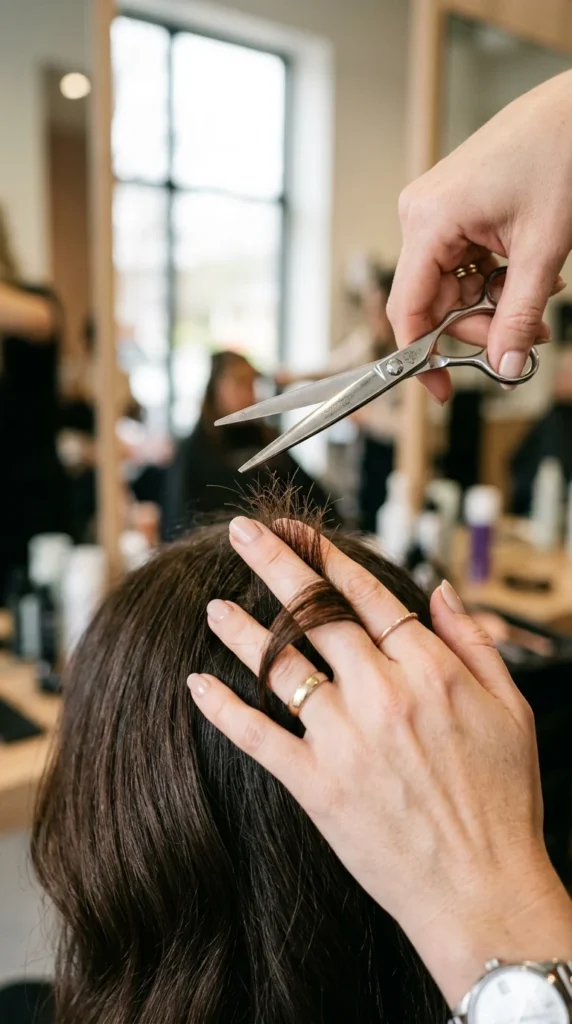
Hair dusting is far more meticulous. The stylist usually works with dry, straightened hair. They take small sections and either twist them or tension them over their fingers (the “maneuver”). This causes the damaged, split ends—which are shorter than the rest of the hair and have lost their weight—to “pop up” away from the main hair shaft. The stylist then skims the surface with their shears, snipping away only those frayed flyaways. It is often described as “shaving the frizz” off the hair.
3. Length
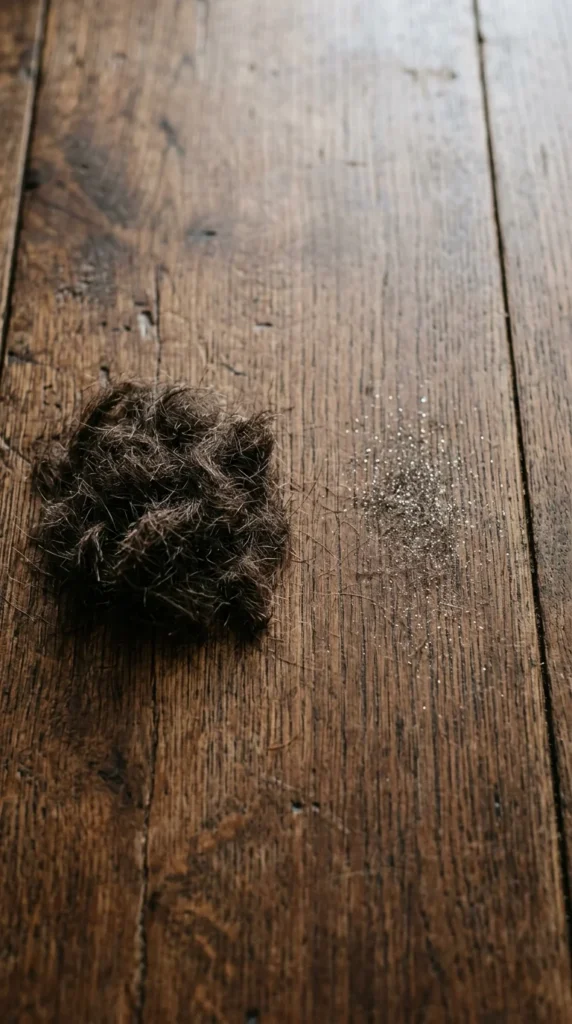
This is the most significant factor for those with “length anxiety.” A trim will invariably result in a visible loss of length. Even a “micro-trim” usually removes a quarter to a half-inch of hair. If you get a trim every six weeks, you might actually be cutting off most of your monthly growth.
Hair dusting lives up to its name because the hair that falls to the floor looks like literal dust. Because the stylist is only removing the microscopic frayed tips of individual strands throughout the head, the overall length of your hair remains exactly the same. You can walk out of the salon with the same 20-inch mane you walked in with, just significantly smoother.
4. Frequency
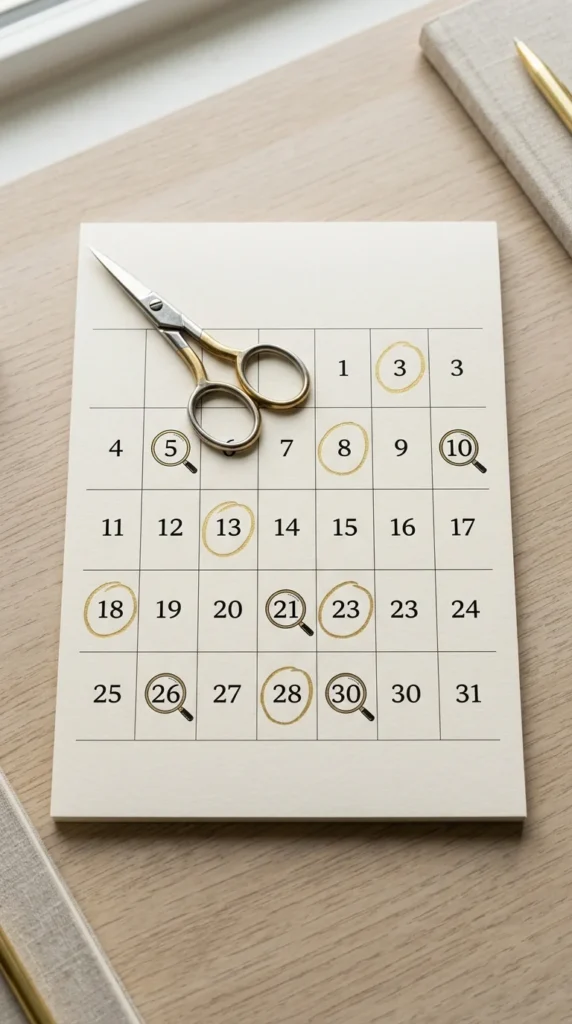
Because they serve different functions, their schedules vary. A trim is typically recommended every 8 to 12 weeks. This schedule ensures that the ends don’t have time to become thin or “see-through,” keeping the baseline of your haircut looking thick and intentional.
Hair dusting can be done more or less frequently depending on your hair’s health. Some people who use heat tools daily may benefit from a dusting every 4 to 6 weeks to prevent splits from traveling too high. Others might only need it once every few months as a “clean up” between major salon visits. Since it doesn’t affect the style or length, it is an “as-needed” maintenance step rather than a structural requirement.
5. Aesthetics
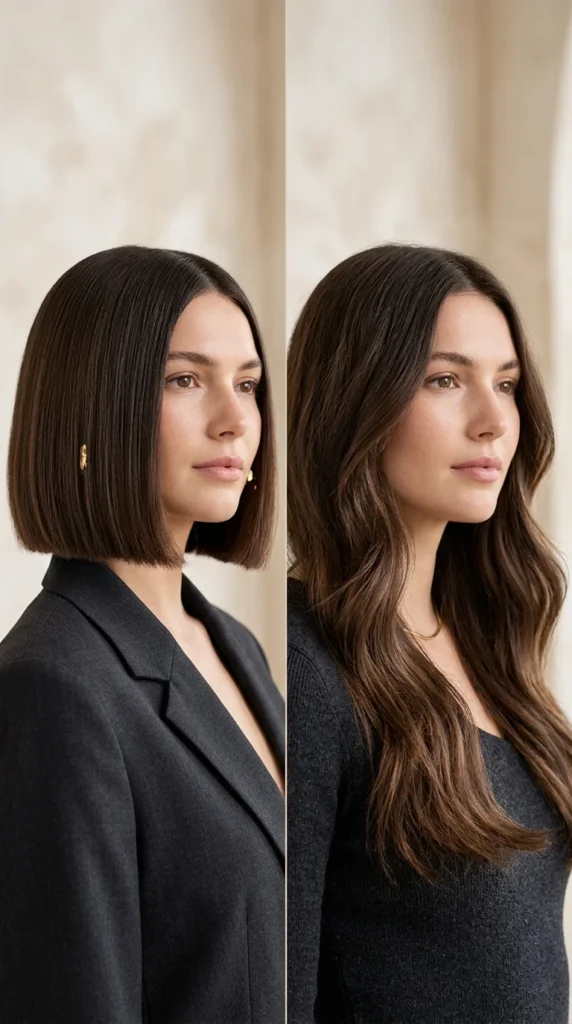
The visual outcome of a trim is a crisp, clean edge. It makes the hair look thicker at the bottom and gives the haircut a defined “finish.” If your hair is starting to look “straggly” or “ratty” at the ends, only a trim can fix that blunt-edge aesthetic.
Hair dusting does not change the shape of your hair. Instead, it changes the texture and sheen. By removing the frayed ends that catch the light and create a “halo” of frizz, hair dusting makes the hair look incredibly shiny and smooth. It’s less about the “cut” and more about the “polish.” It allows the hair to reflect light better because the surface of the hair cuticle is no longer interrupted by jagged split ends.
6. Duration

Time is a luxury, and these two services consume it differently. A standard trim is relatively quick. Once the hair is washed and sectioned, a skilled stylist can perform a basic trim in 15 to 30 minutes. It is often bundled into a standard “cut and blow-dry” appointment.
Hair dusting is a labor of love. Because the stylist has to go through the hair section by tiny section, searching for individual splits, it can take anywhere from 45 minutes to 90 minutes, depending on the thickness and length of your hair. It is a slow, methodical process that requires intense focus and steady hands.
7. Tools
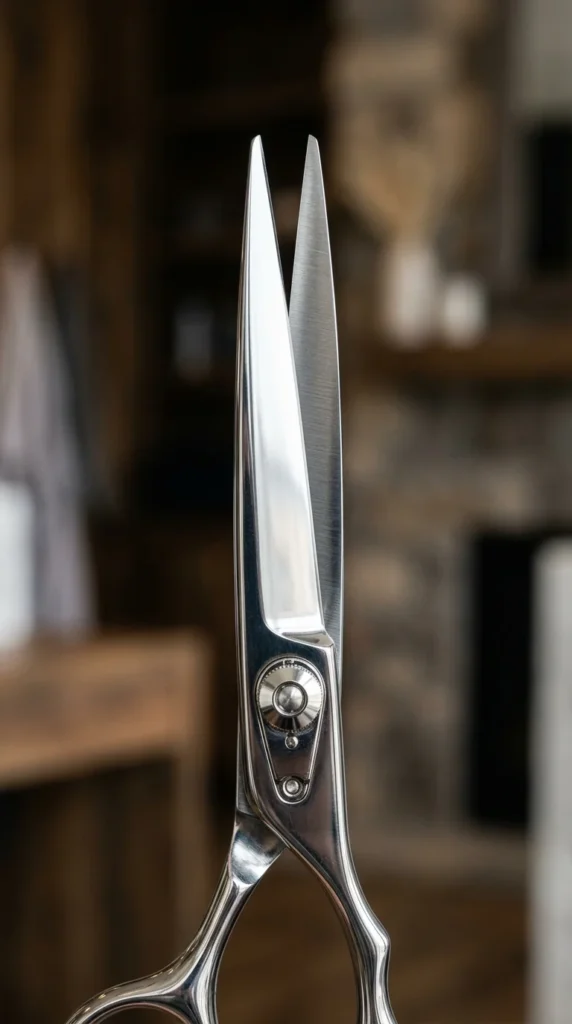
While both use scissors, the requirements for hair dusting are even more stringent. A trim can be performed with standard professional shears. However, because dusting involves cutting individual, often dry, hair strands at various angles, the shears must be exceptionally sharp—often referred to as “razor-sharp” Japanese steel.
Using dull scissors for dusting is counterproductive; a dull blade will “crush” the hair strand rather than slicing it, which actually creates more split ends a few weeks later. In dusting, the quality of the tool is paramount because there is no room for error when you are snipping mid-shaft.
8. Target
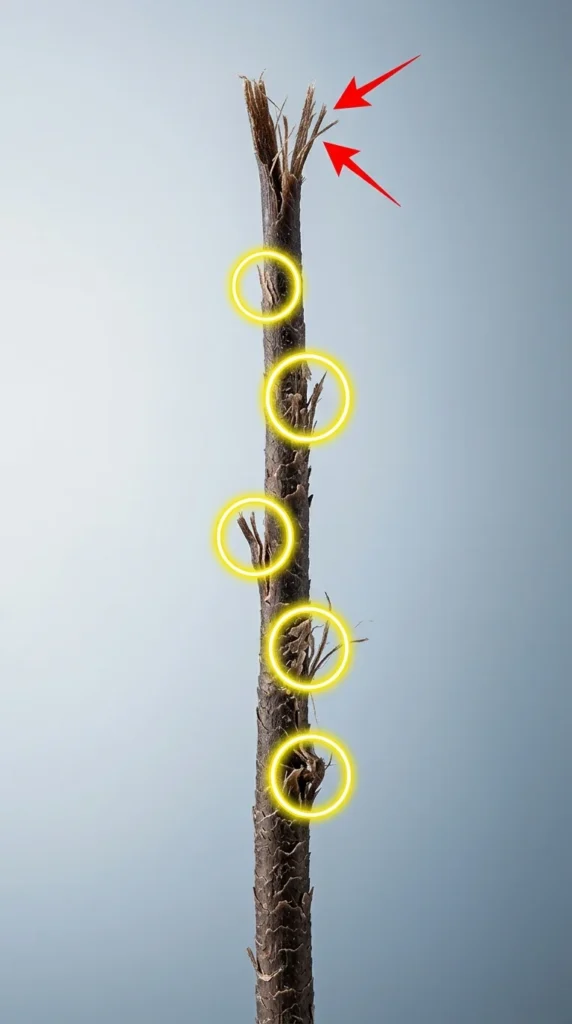
The “target zone” for a trim is the perimeter. It addresses the damage that accumulates at the very bottom due to friction against clothing and general aging of the hair. It’s a “bottom-up” approach to health.
Hair dusting targets “mid-shaft splits.” Many people don’t realize that hair damage doesn’t just stay at the bottom. Due to chemical processing, heat styling, or even rough brushing, hair can break or split halfway up the head. These are the hairs that a trim will never reach. Dusting is the only way to remove these internal “ticks” of damage without giving yourself a forced pixie cut.
9. Skill
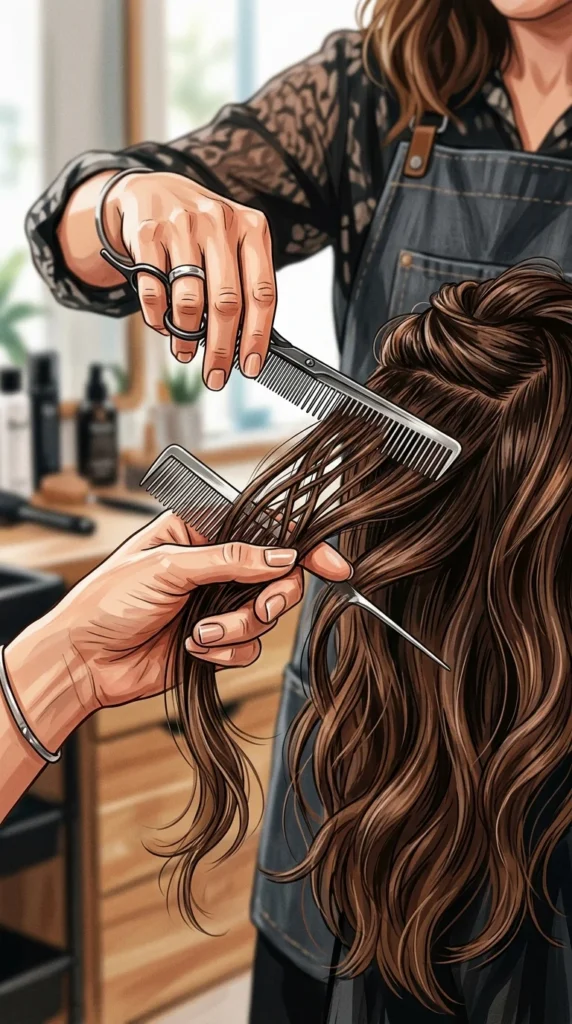
You might be tempted to try these at home, but the skill gap is wide. A trim is something many DIY enthusiasts attempt (with varying degrees of success). Since it involves a straight line at the bottom, there are numerous tutorials on how to “self-trim.”
Hair dusting is much harder to master. It requires a specific eye to distinguish between a new “baby hair” (new growth) and a split end. If you accidentally snip your new growth, you are thinning out your hair density. Professionals are trained to see the difference in the light—split ends look dull and frayed, while new growth has a tapered, healthy point. Dusting requires a level of dexterity and visual acuity that is difficult to replicate in a bathroom mirror.
10. Cost

In the salon world, you usually get what you pay for. A trim is often priced as a standard haircut. It is a foundational service that most stylists offer at a base rate.
Hair dusting, however, is often treated as a specialty service or an add-on. Because of the time and precision required, many high-end stylists charge the same as—or more than—a full haircut for a dusting session. It is considered a premium “maintenance treatment.” While it might seem expensive for “not losing any length,” you are paying for the stylist’s time and the preservation of your hair’s integrity.
Which One Do You Need?
Choosing between a hair dusting and a trim depends on your current hair state.
- Choose a Trim if: Your ends look thin, you want to change your style, or you haven’t had a cut in over four months.
- Choose Hair Dusting if: You are desperately trying to grow your hair longer, your hair feels “crunchy” or “velcro-like” when you run your fingers through it, but you love your current length.
Ultimately, the best hair care routine involves a combination of both. Many experts recommend a “dusting” every couple of months to keep the surface smooth, interspersed with a “trim” twice a year to keep the baseline strong and thick. By mastering the balance between these two techniques, you can enjoy hair that is both exceptionally long and undeniably healthy.